Glacier Bay and the Tlingit Return
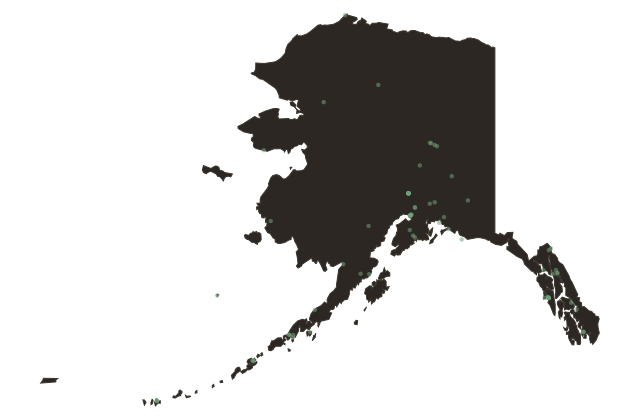
Alaska
In seventeen fifty, the bay that would later be called Glacier Bay was not a bay. It was a glacier. A solid wall of ice extended from the mountains to the open water of the Gulf of Alaska, two hundred miles of ice that had advanced over centuries and submerged the coastline below.
The Huna Tlingit had lived in this territory for thousands of years. The glacial advance had displaced them. They retreated to their relatives' territories to the south and waited.
By the time John Muir arrived by canoe in eighteen seventy-nine, the glacier had retreated nearly fifty miles, and a new marine ecosystem, teeming with whales, seals, and fish, was forming in the open water behind it. The Huna were already returning. They found Muir arriving at the same time, paddling north in a canoe with a Tlingit guide, writing in his journal about the sublime beauty of the ice.
Muir wrote extensively about the glaciers. He wrote almost nothing about the Huna Tlingit.
When the National Park Service designated Glacier Bay a national monument in nineteen twenty-five and then a national park in nineteen eighty, the Huna were excluded from traditional subsistence fishing and gathering within the newly protected boundaries. The park's founding rationale was the preservation of a wilderness. The Huna understood the bay as their homeland, which it had been, in the periods when the ice allowed it, for as long as they have memory.
The ice has continued to retreat since Muir's visit, adding up to a total retreat of roughly sixty five miles since the glacier's Little Ice Age maximum. The bay grows each year. In recent decades, formal agreements have restored some traditional Huna practices within park boundaries. The tribe is working with the National Park Service on new interpretive programs that center Huna history alongside the geological record.
The glaciers are retreating. The Huna are still there.