Katmai: The Eruption That Made a Valley and Erased a Village
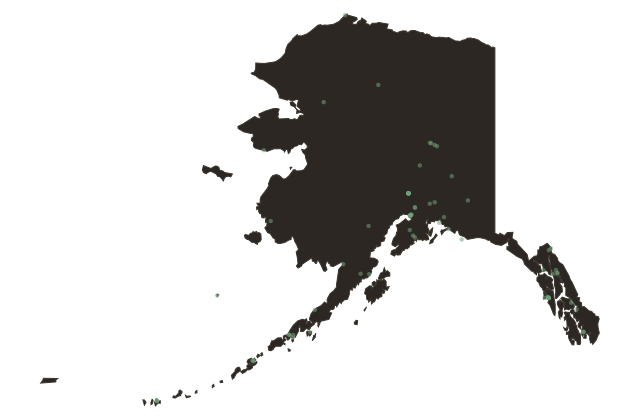
Alaska
At one in the afternoon on June sixth, nineteen twelve, a vent at the base of Mount Katmai on the Alaska Peninsula opened and did not stop. What followed over the next sixty hours was the largest volcanic eruption on earth in the twentieth century. More than three cubic miles of magma exploded from a vent that had not existed before, a vent later named Novarupta. The ash column rose into the stratosphere. Ash fell on Kodiak Island, one hundred miles to the east, at a rate of an inch per hour. The sound of the explosions was heard in Juneau, seven hundred fifty miles away.
The summit of Katmai itself collapsed inward as the magma chamber beneath it emptied. The valley below Novarupta was buried under as much as seven hundred feet of hot pyroclastic material. When it cooled, hundreds of fumaroles opened in the pumice floor, venting steam and sulfurous gas. Robert Griggs, a botanist who reached the valley in nineteen sixteen on the first National Geographic expedition, named it the Valley of Ten Thousand Smokes. His accounts in National Geographic brought the eruption to national attention. Katmai was declared a national monument in nineteen eighteen.
What the national monument story did not center was the community the eruption displaced. At the head of Iliuk Arm on Naknek Lake, a small Alutiiq community called Savonoski had stood for generations. The Alutiiq people, also known as Sugpiaq, had lived across the Alaska Peninsula for thousands of years, building a culture of maritime subsistence and ocean travel in baidarka kayaks refined enough that Russian colonizers later borrowed the design. The Novarupta eruption did not kill anyone at Savonoski directly. It did not need to. The ash buried the salmon streams. Within weeks, the families packed what they could carry and left. They never returned. The event is called the Savonoski Exodus. The village was eventually buried entirely, and when Griggs reached the area four years later it was gone.
Today the park is better known for its bears. Brooks Falls, where brown bears stand in the river to intercept sockeye salmon during their summer run, draws photographers from around the world. The bears and the salmon and the volcano that made the valley are all part of the same ecosystem. The Alutiiq people who lived at its center for thousands of years are part of that history too, even if the monument designation that followed the eruption did not acknowledge them by name.