The Alaska Railroad: Five Hundred Miles of Federal Intent
Alaska
President Warren Harding drove the golden spike for the Alaska Railroad on July fifteenth, nineteen twenty-three, at a place called Nenana on the Tanana River. He was the only American president ever to visit Alaska while in office until that point, and he died less than six weeks later. The railroad he inaugurated had taken nine years to build.
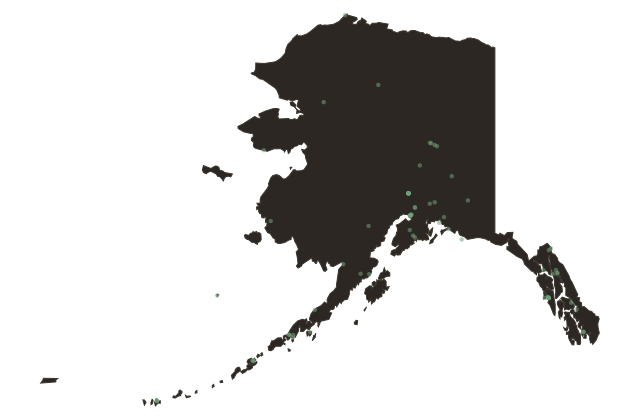
Congress authorized federal construction of the Alaska Railroad in nineteen fourteen, after private rail companies had proven unable or unwilling to build a line that the territory needed but that could not generate the short-term returns investors required. The line runs roughly four hundred seventy miles from Seward on the Kenai Peninsula north through Anchorage, across the Alaska Range at Broad Pass, through Denali, and on to Fairbanks in the Interior. It crosses terrain that engineers in nineteen fourteen called impossible: permafrost that shifts with seasonal freezing and thawing, river crossings over glacially fed streams that change course, and mountain passes that accumulate snow measured in feet per week.
The railroad was the first backbone of the modern Alaska economy. It made Anchorage. The city began as a construction camp in nineteen fourteen, a collection of tents and frame buildings that housed railroad workers at the point where Ship Creek met the coast. By nineteen twenties it had become the territorial headquarters and eventually, after statehood, the commercial center of the state. The railroad carried coal from the Matanuska Valley and later from Healy. It carried military supplies during World War Two, when the Alaska Railroad was federalized and ran twenty-four hours a day supplying bases from Fort Richardson south through the Kenai.
The federal government sold the Alaska Railroad to the state of Alaska in nineteen eighty-five for about twenty-two million dollars. It still runs. The Anchorage to Fairbanks passenger service remains one of the few long-distance train routes in the United States that travels through roadless wilderness, offering views of moose in the rail corridor and, in autumn, snowfall on the Alaska Range before it arrives at either end.