The Cold War Frontier: DEW Line, Proximity, and the Listening State
Alaska
At the closest point, Alaska and Russia are two miles apart.
Little Diomede Island, on the American side, and Big Diomede Island, on the Russian side, sit in the middle of the Bering Strait. On a clear day you can see one from the other. The International Date Line runs between them. For decades during the Cold War, they were the most watched two miles in the world.
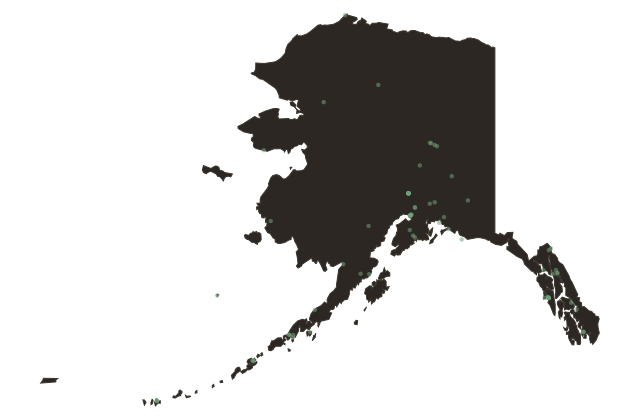
Alaska's strategic position defined the second half of the twentieth century for the territory and then the state. The Soviet Union shared a coastline across the Bering Sea. Soviet submarines patrolled under the Arctic ice north of the Brooks Range. Soviet bombers, flying the polar routes, would cross over Alaska if they were ever ordered toward the American continent.
The American response was the Distant Early Warning Line, known as the DEW Line, a chain of sixty-three radar stations built between nineteen fifty-four and nineteen fifty-seven stretching from Alaska across northern Canada to Greenland. The Alaska stations ran along the Arctic coast and the Seward Peninsula. They were supplied entirely by air and by sea, built in conditions of permanent darkness and temperatures that froze equipment and workers alike. At their peak they employed several thousand people in facilities that the men who staffed them described, in letters home, as standing alone on the edge of the world.
Fort Richardson, Elmendorf Air Force Base, Eielson Air Force Base near Fairbanks, and Fort Wainwright formed the permanent military infrastructure that the Cold War built into Alaska. At the peak of the Cold War buildup in the early nineteen fifties, military spending was the largest single source of income in the Alaska territorial economy. That military infrastructure explains why Anchorage and Fairbanks grew as fast as they did in the postwar decade.
The DEW Line stations were gradually decommissioned from the late nineteen eighties into the nineteen nineties and replaced by more modern radar systems. Many of the original sites are now listed as contaminated Superfund sites, having been abandoned with the fuel, solvents, and PCB-containing equipment of their era still on-site. The Cold War ended. The cleanup is still in progress.