The Quapaw, Caddo, and Osage, The Nations Before the Border
Arkansas
When the first French explorers descended the Mississippi in sixteen seventy-three, they found the lower Arkansas River valley occupied by a confederacy of four villages. The people called themselves Ugakhpa, those who live downstream. The French called them Quapaw.
They were horticulturalists and hunters who had likely migrated to the region from the Ohio Valley centuries earlier, and they greeted Marquette and Jolliet with ceremony and food. The Quapaw would remain a diplomatic partner to the French for the next hundred years, and their name would outlast every European attempt to claim the land as their own. They were not alone.
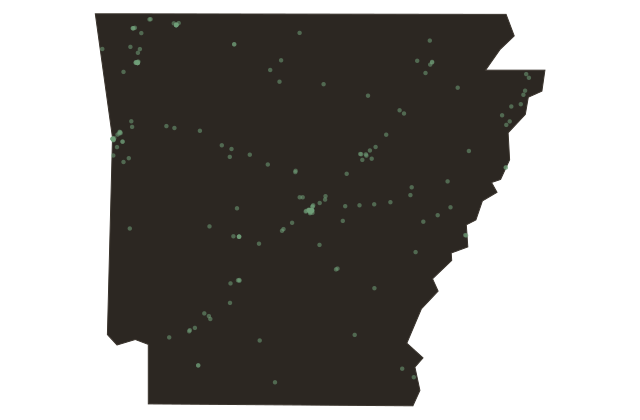
The Caddo Confederacy dominated the southwest, a sophisticated agricultural people organized into chiefdoms with elaborate ceremonial mound centers, whose ancestors had built the great Spiro site just across what is now the Oklahoma border. The Osage claimed the northwest, powerful, horse-adapted hunters of the tallgrass prairie who extracted trade tribute from nearly everyone who moved through their territory. Between these three nations, the land that became Arkansas was fully inhabited, mapped by Indigenous knowledge, and governed by Indigenous political systems that the United States government would spend the nineteenth century dismantling.
The Quapaw ceded most of their Arkansas lands under the treaties of eighteen eighteen and eighteen twenty-four, and by eighteen thirty-four most had been removed to Indian Territory. The Caddo faced removal by eighteen thirty-nine. The Osage cession came in stages through the eighteen-twenties.
What had been a landscape of overlapping sovereignties became, almost overnight, an American territory organized around cotton and land speculation. The names stuck. Arkansas draws its very name from the Illinois-language word for the Quapaw.