Bellanca Airfield: The Italian Who Shaped American Aviation
Near Wilmington, Delaware
The modest flat ground you are passing near New Castle was once the testing ground of one of aviation's unsung giants. Giuseppe Mario Bellanca arrived in America from Sicily in nineteen eleven with a passion for aircraft design that would shape the early decades of flight.
Bellanca's planes were not famous for their speed alone. They were famous for their efficiency. He pioneered the use of wing struts that doubled as structural members and lift surfaces simultaneously, wringing remarkable range from modest engines. When Charles Lindbergh was planning the first solo transatlantic flight in nineteen twenty-seven, his original choice of aircraft was a Bellanca monoplane called Columbia. Lindbergh could not secure the rights, and so he flew the Spirit of Saint Louis instead. Two weeks after Lindbergh's triumph, Columbia flew nonstop from New York to a field near Eisleben, Germany, three thousand nine hundred miles, short of its goal of Berlin, a feat that underscored just how capable the design truly was.
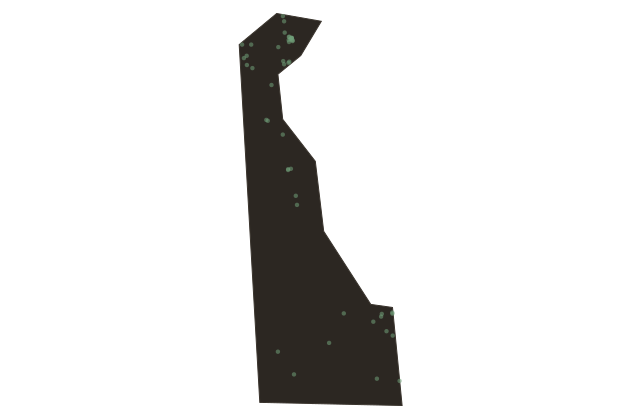
In nineteen twenty-eight, Bellanca partnered with Henry B. du Pont and built an airfield, aircraft plant, and service hangar right here in New Castle, Delaware. The du Pont family had urged him to bring his revolutionary designs to their home state, and he did. The plant turned out approximately three thousand aircraft before closing in nineteen fifty-four. During World War Two, Bellanca supplied the military with trainers and utility planes that helped fill gaps in the enormous production pipeline. Another record fell in nineteen thirty-one when his Miss Veedol became the first aircraft to fly nonstop across the Pacific, traveling four thousand five hundred miles from Japan to Washington State.
Giuseppe Bellanca sold the company in nineteen fifty-four and retired to nearby Galena, Maryland. He died in nineteen sixty. In nineteen seventy-three, he was enshrined in the National Aviation Hall of Fame, belated recognition that the man who built this airfield had quietly redefined what airplanes could do.