The Land Itself, A Wedge Between Two Worlds
Delaware
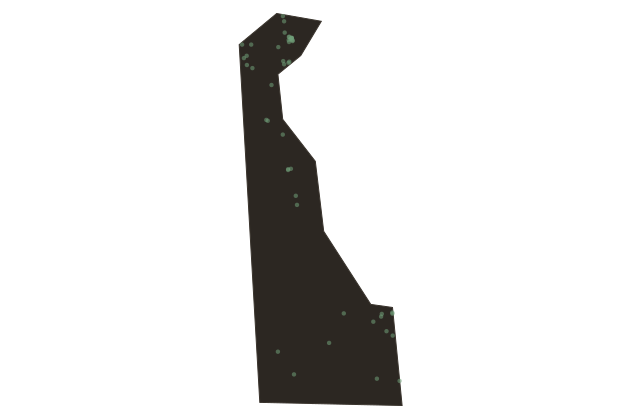
Delaware is the second smallest state in the union, just under two thousand square miles of land, roughly the size of a large county in the western states. And yet it contains, in miniature, almost every landscape type of the mid-Atlantic coast. Drive from the Pennsylvania border south to the Maryland line and you cross three distinct worlds in less than one hundred miles.
The northern tip of the state is Piedmont, rolling hills of weathered metamorphic rock, cut through by the fast-moving streams that powered Delaware's early mills. The Brandywine valley here is genuinely scenic, its wooded banks and stone bridges evoking a landscape that has changed less than you might expect since the colonial era. This is the Delaware of du Pont country estates and the Wyeth family's painterly countryside, a landscape so photogenic that Andrew Wyeth spent decades wandering it with his sketchbook.
The middle third transitions to coastal plain, flat and agricultural, underlain not by rock but by layers of ancient marine sediment. The soil here is sandy and drains quickly, not ideal for grain but well suited to the shallow-rooted truck crops, strawberries, sweet corn, watermelons, that fed mid-Atlantic markets for much of the twentieth century.
The lower third is the Delaware that surprises visitors from the interior. The land approaches sea level, the drainage ditches multiply, and the pine forests along the coast are fragrant and cathedral-still. The beaches at Rehoboth, Dewey, and Bethany draw hundreds of thousands of summer visitors, including, traditionally, a remarkable concentration of Washington, D.C. political figures who have made coastal Delaware their summer retreat for generations. The ocean here is cold, the surf modest, and the boardwalk culture relaxed rather than glittery. Delaware's beach towns have a specific unpretentious charm that is itself a kind of identity.
The whole state sits on the Delaware Coastal Plain, a wedge of land poised between the Chesapeake tidewater culture to the south and the industrialized Delaware River corridor to the north. Small enough to walk across in two days, varied enough to feel like several different places at once.