Gold at Dahlonega, America's First Gold Rush
Georgia
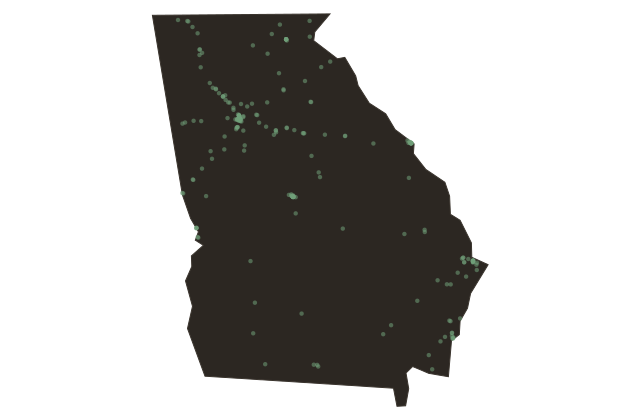
The year was eighteen twenty-eight, and a man named Benjamin Parks, by tradition, stumbled across a gold nugget in the North Georgia hills near a Cherokee town called Talonega, meaning yellow metal in Cherokee. Within months, thousands of prospectors were swarming the mountains. This was one of America's first major gold rushes, nearly twenty years before California and Sutter's Mill.
The site that grew up around the diggings took a version of the Cherokee name: Dahlonega. By eighteen thirty-eight the federal government had established a branch mint there, the Dahlonega Mint, which coined millions of dollars in gold before the Civil War interrupted operations. The mint superintendent at one point was a man named Joseph Singleton, and the coins it struck, bearing the small D mint mark, are now among the most prized in American numismatics.
The Dahlonega gold rush accelerated everything that followed. Prospectors flooded onto Cherokee land in direct violation of federal treaty protections. The Georgia legislature responded by surveying Cherokee territory and opening it to a lottery for white settlers. When the Supreme Court ruled in the Cherokee's favor in Worcester versus Georgia, the gold discovery made defiance of that ruling politically irresistible. You can draw a nearly straight line from Benjamin Parks's nugget to the Trail of Tears.
The mountains around Dahlonega still carry gold in their streambeds. A local saying holds that there's gold in them thar hills, a phrase so associated with the region that it passed into American idiom. The old Lumpkin County courthouse on the square is now a gold museum, while the mint itself stood south of town and burned in eighteen seventy-eight. Visitors still pan the creek.