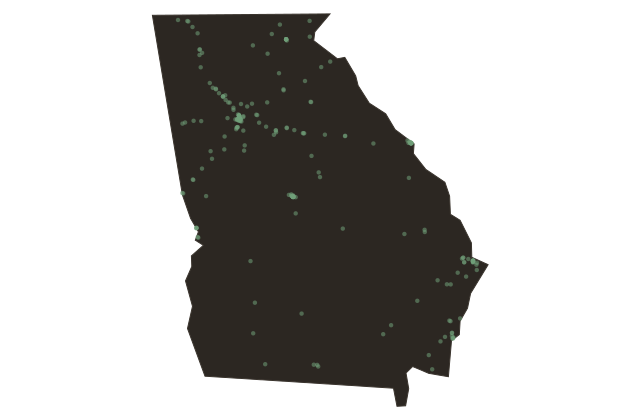
Kennesaw Mountain: Sherman's Frontal Assault
Georgia
The mountain rising ahead of you is Kennesaw, and what happened on its slopes on June twenty-seventh, eighteen sixty-four, was one of the most lopsided days of killing in the entire Atlanta Campaign.
For two months, Union General William T. Sherman had been pressing Confederate General Joseph Johnston south through North Georgia toward Atlanta. Johnston was a methodical defensive genius. Every time Sherman tried to outflank him, Johnston simply pulled back to a new prepared ridge, entrenched, and dared the Yankees to charge uphill. Sherman had been outmaneuvering him rather than attacking those entrenchments directly. But by late June, the flanking marches had lengthened Sherman's supply lines, his men were exhausted by the constant maneuvering in summer heat, and Sherman convinced himself that Johnston had stretched his defensive line too thin.
He was wrong. On the morning of the twenty-seventh, Sherman ordered a massive frontal assault directly into the Confederate earthworks on Kennesaw Mountain and on nearby Cheatham Hill. About thirteen thousand Union soldiers advanced uphill into rifle pits and artillery. The result was catastrophic. In a few hours of fighting, the Union lost roughly three thousand men killed, wounded, or missing. Confederate casualties were under one thousand. At a place that soldiers called the Dead Angle on Cheatham Hill, Union troops actually reached the Confederate parapet, planted flags, and fought hand-to-hand at the crest before being driven back.
Despite his tactical defeat, Sherman did not abandon his campaign. Within days he resumed his flanking movements, forcing Johnston to abandon the mountain and continue retreating toward Atlanta. President Jefferson Davis, furious at Johnston's persistent withdrawal, relieved him of command on July seventeenth and replaced him with the more aggressive John Bell Hood. That decision would prove disastrous for the Confederacy.
Today the park preserves nearly two thousand nine hundred acres of those earthworks, rifle pits, and cannon positions. The Confederate trenches on the mountain are among the best-preserved Civil War field fortifications in the country, largely unchanged since the summer of eighteen sixty-four. The mountain was established as a federal battlefield site in nineteen seventeen and redesignated a national park unit in nineteen thirty-five.