Sherman's March, Total War Comes to Georgia
Georgia
November fifteenth, eighteen sixty-four. General William Tecumseh Sherman watched Atlanta burn, fires set partly by his own orders, partly by retreating Confederate forces, then turned his sixty thousand men southeast and began a march that would redefine what war meant in the modern era.
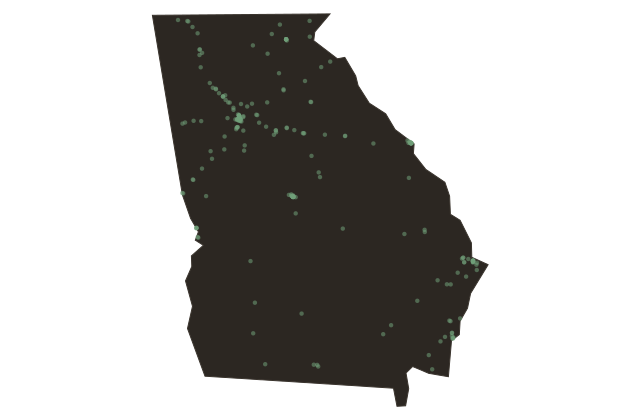
Sherman's March to the Sea was not a battle. It was a calculated strategy to destroy the Confederate economy and break Southern will. Over the next month, Union troops cut a path roughly sixty miles wide across the length of Georgia, from Atlanta to Savannah. They tore up railroad tracks, twisted the rails around trees, bent into shapes soldiers called Sherman's neckties, burned warehouses, mills, and plantation houses, consumed livestock, and seized or destroyed whatever could not be carried. General Sherman later estimated his forces inflicted about one hundred million dollars in damage, a staggering sum in eighteen sixty-four currency.
The destruction was enormous, but it was not indiscriminate in the way later mythology sometimes portrayed it. Sherman's orders explicitly prohibited assault on civilians and specified limited destruction of private dwellings. Those orders were not universally followed, and foraging parties committed documented abuses. The true catastrophe for many Georgians was not the burning but the arrival of freedom, tens of thousands of enslaved people walked away from plantations and followed the Union army, many of them walking for the first time in their lives toward a horizon of their own choosing.
Sherman reached Savannah on December twenty-first and sent a famous telegram to President Lincoln: I beg to present you as a Christmas gift the city of Savannah. The Confederacy never recovered its logistical base in the interior South. The war in the East ended four months later.