The Senegambian Rice Connection: Who Knew How to Grow It
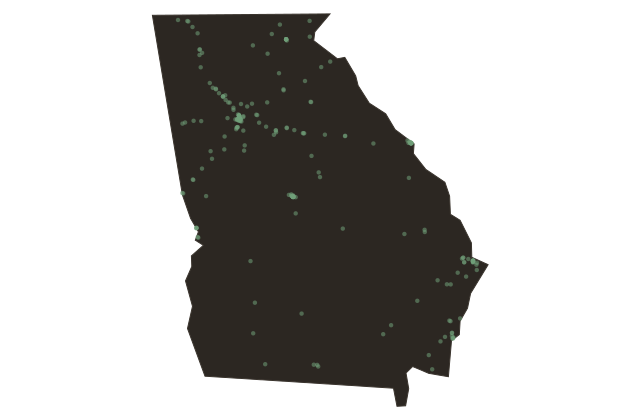
Near Tybee Island, Georgia
Before there was a Carolina rice economy, there was a Senegambian rice economy. The Upper Guinea coast, the region of West Africa roughly corresponding to modern Senegal, the Gambia, Guinea-Bissau, and Sierra Leone, had been cultivating wet rice for centuries before any European ship arrived. The farmers there had developed seed varieties, field preparation techniques, irrigation and drainage systems, and harvesting methods specifically adapted to coastal wetlands. Rice was not something they grew. It was something they knew.
Carolina planters in the seventeen hundreds understood this. They placed advertisements in Charleston newspapers. Those advertisements have been preserved in the Library of Congress's Chronicling America archive, and they are explicit: planters specified that they wanted people from the "Rice Coast," from "Gambia," from "Sierra Leone." They were not advertising for general agricultural labor. They were advertising for specific technical expertise that they did not possess themselves and intended to extract from people they could legally own.
The people who arrived with that expertise brought more than the ability to grow rice. They brought the vocabulary for it, the material culture associated with it, the basket forms used in its processing, and the culinary traditions built around it. The rice that made the Lowcountry the wealthiest agricultural region in British North America was grown by people whose knowledge was the essential ingredient, not the land, not the climate, not the capital of the men who claimed ownership of all three.
The wealth accumulated by the planter class from this arrangement funded the architecture of Charleston, the plantation houses on the Ashley River, and the political power that made South Carolina a dominant force in the colonial and antebellum United States. The source of that wealth is not in question.