The Canoe Finders, Polynesian Settlement of Hawaii
Hawaii
Sometime around eight hundred years ago, a fleet of double-hulled canoes crossed the most remote stretch of open ocean on the planet and reached a chain of volcanic islands that no human being had ever seen. The people aboard were Polynesian voyagers, almost certainly from the Marquesas Islands, navigating by the stars, the swells, the wind direction, and the flight of birds. They brought with them breadfruit and taro, pigs and dogs and chickens, and the cultural knowledge of a seafaring civilization that had been spreading across the Pacific for three thousand years. When they landed, the islands that would come to be called Hawaii were theirs entirely.
The ancestors who made those first crossings left no written record. What they left was a living one: a language, a religion, a system of land use and social organization, a body of chant and genealogy that encoded history in forms meant to be spoken aloud and remembered. The Hawaiian oral tradition carried knowledge forward through the generations with a precision that outsiders sometimes misread as myth. It was not myth. It was archive.
A second wave of voyaging, probably from Tahiti, reached Hawaii sometime around eight hundred to a thousand years ago. These later arrivals brought with them the kapu system, a set of sacred prohibitions governing behavior, food, and the relationship between ranks of people and the divine. They brought a more hierarchical social order. Hawaiian society as it existed when Europeans first arrived in seventeen seventy-eight was the product of at least ten centuries of development, adaptation, and internal evolution in complete isolation from the rest of the world.
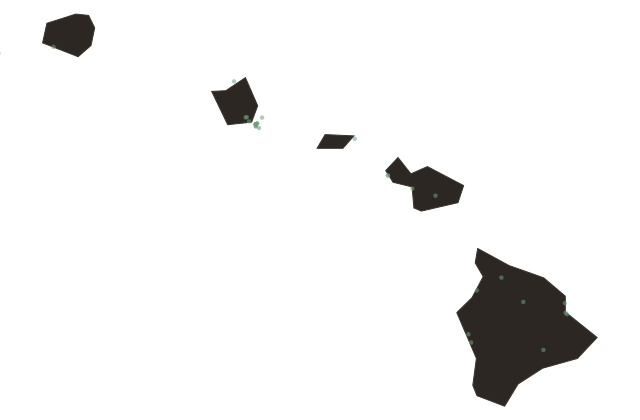
The islands those first canoes found were already old. Hawaii Island at the southeastern end of the chain was actively building itself from the seafloor. The oldest northwestern islands were already sinking back. The entire archipelago was a conveyor belt of rock and time, running northwest across the Pacific above a fixed hot spot in the Earth's mantle. The people who settled it built their civilization on one of the most geologically dynamic places on the surface of the planet.