The Hawaiian Language and the Punana Leo Schools
Hawaii
In nineteen eighty, linguists made a count that was close to a final tally. Fewer than seventy children in all of Hawaii spoke Hawaiian as their first language, learned in the home, the way languages are meant to be carried. The language that named every mountain, every wind, every ocean current around the islands, that encoded a system of knowledge accumulated over at least a thousand years, had nearly reached the point where it would die with the people who still held it.
The path to that point ran through eighteen ninety-six. Three years after the overthrow of the Hawaiian Kingdom, the new government passed Act Fifty-Seven, making English the sole language of instruction in all Hawaiian schools. The law was not incidental; it was structural. A generation of Hawaiian children went to school in a language that was not their own, and returned home unable to explain what they had learned. Within two generations, the link broke.
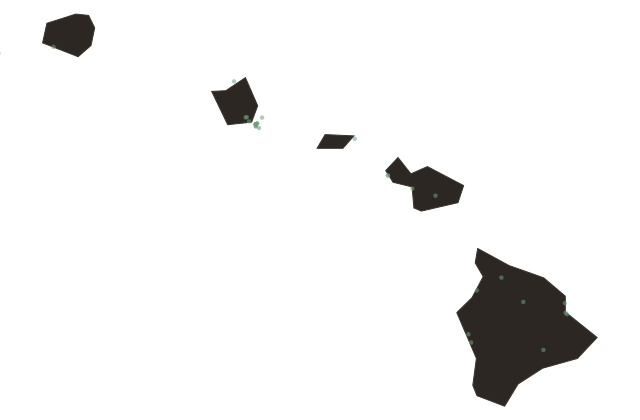
The recovery began in the early nineteen eighties, when a group of Native Hawaiian parents and educators opened the first Punana Leo preschool, an entirely Hawaiian-language immersion school modeled on the Maori kohanga reo movement in New Zealand. The official founding documentation places this in nineteen eighty-four. What started as one preschool became a K through twelve system, then a network of Hawaiian-language schools across every major island.
By twenty twenty, more than twenty-four thousand students were receiving their education in Hawaiian. The language is still classified as endangered. It is no longer dying. The precise measure of what happened between nineteen eighty and twenty twenty is this: from fewer than seventy first-language-speaking children to a generation being raised and schooled in the same tongue.