Lewis and Clark Cross the Bitterroots
Idaho
September of eighteen oh five was not supposed to be this hard. Meriwether Lewis and William Clark had been warned by a Shoshone guide named Old Toby that the mountains ahead were rugged, but nothing in their experience on the Missouri or the Great Plains had prepared them for the Bitterroot Range.
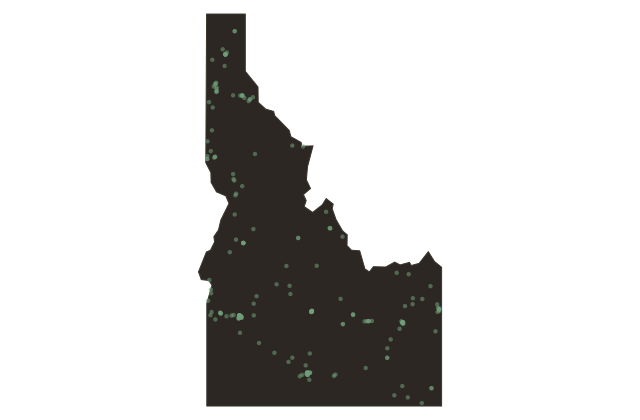
They began the Lolo Trail crossing from Traveler's Rest in present-day Montana on approximately September eleventh, soon crossing into Idaho. Food ran short almost immediately. Game was scarce in the mountains. It snowed. Journal entries from mid-September describe snow, cold, and hunger. They killed and ate some of their horses to survive.
The Lolo Trail, which they followed along the ridge spines of the Bitterroots, had been a Nimiipuu trade route for generations. The Corps spent roughly eleven days on the trail, with Clark's advance party emerging onto the Weippe Prairie in present-day Idaho's Clearwater County on September twentieth and the rest two days later, more dead than alive. It was there that the Nimiipuu fed them camas root and dried salmon in quantities that made many of the men dangerously ill.
But they rested, built canoes on the Clearwater River, and on October seventh launched into the current heading west. From that moment the rivers carried them: Clearwater to Snake to Columbia. They reached the Pacific in November.
The return trip was easier in some ways. In the spring of eighteen oh six they crossed the Bitterroots again, this time guided by Nimiipuu men who knew every pass. The mountains that had nearly killed them going west became, with good guides, a straightforward crossing. The Corps was home in St. Louis by September of eighteen oh six, and Idaho had been, for a few months, the most consequential stretch of the American continent.