The Mormon Corridor, Southeast Idaho's Quiet Kingdom
Idaho
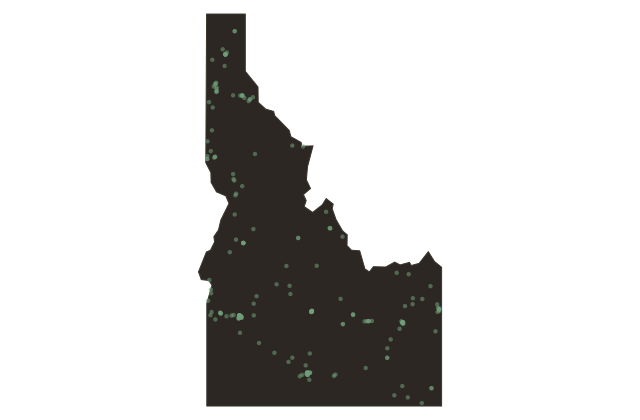
Drive southeast from Boise toward Pocatello, then continue toward the Utah line, and the geography of the towns changes. The town names, the church steeples, the grid-planned streets aligned to cardinal directions, the fields running all the way to the fence lines with no wasted ground: these are the signatures of Latter-day Saint settlement, and they are nearly as consistent in southeastern Idaho as they are in Utah.
The first Mormon settlers arrived in Franklin, Idaho, in eighteen sixty, establishing what was long believed to be the earliest permanent white settlement in the state. They came north from Salt Lake City at the direction of Brigham Young, who was systematically settling the Great Basin and the surrounding valleys with families from the growing church population. Young viewed the Snake River Plain as a natural extension of Deseret, the Mormon homeland.
The settlers were organized. They built irrigation systems before they built anything else. They laid out towns on the Joseph Smith plat of Zion, with wide streets and large lots for gardens and orchards, with the meetinghouse at the center. They often named their settlements after church leaders and pioneers. Idaho communities like Franklin, Rexburg, and Rigby reflect this origin.
The relationship between the Mormon settlers and the federal government was strained through the polygamy era. Idaho passed a test oath in eighteen eighty-five that effectively barred practicing Latter-day Saints from voting. The Church of Jesus Christ of Latter-day Saints officially ended the practice of plural marriage in eighteen ninety, and over the following decades the tension faded. Today roughly a quarter of Idaho's population identifies as Latter-day Saint, a share second only to Utah. Southeastern Idaho is, in the most literal sense, an extension of the Mormon corridor.