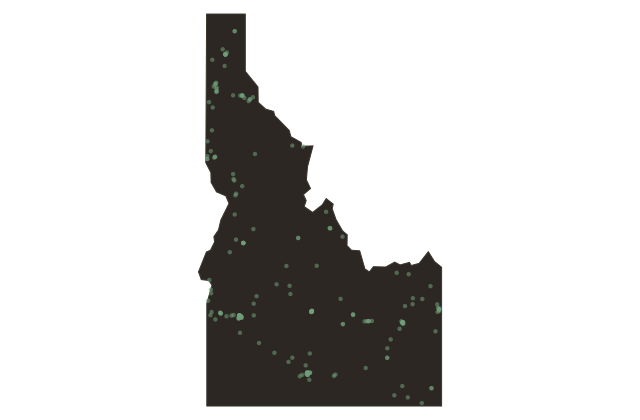
The Shoshone-Bannock and the Snake River Plain
Idaho
In the high desert of southern Idaho, the Snake River cuts a canyon system that in places drops deeper than the Grand Canyon. This was the homeland of the Shoshone people, who had lived across the Great Basin and the Snake River Plain for thousands of years. They fished the river, hunted antelope across the lava plain, gathered roots and berries, and traded with peoples as far west as California and as far east as the Missouri River tribes.
The Bannock, a Northern Paiute group who spoke a different language, had migrated into southern Idaho and formed close alliances with the Shoshone. By the time American settlers began crossing the region on the Oregon Trail in the eighteen forties, the two peoples were so intertwined that Americans often grouped them together. Today the Shoshone-Bannock Tribes govern the Fort Hall Reservation, established by the treaty of eighteen sixty-eight, in the upper Snake River Plain near Pocatello.
The path to that reservation was not peaceful. In January of eighteen sixty-three, at a site on the Bear River in what is now southeastern Idaho, U.S. Army Colonel Patrick Edward Connor led an attack on a Shoshone winter encampment. The battle, which historians often call the Bear River Massacre, resulted in the deaths of somewhere between two hundred fifty and four hundred Shoshone men, women, and children. It is considered among the deadliest attacks on a Native community in American history. Connor was promoted to brigadier general two weeks later.
The Shoshone-Bannock Tribes endure. The Fort Hall Reservation today spans approximately five hundred thousand acres, and the tribes have been at the forefront of salmon restoration efforts, working to recover the fish that once sustained their ancestors across a river system now blocked by dams.