Quaker Indiana and the Underground Railroad
Indiana
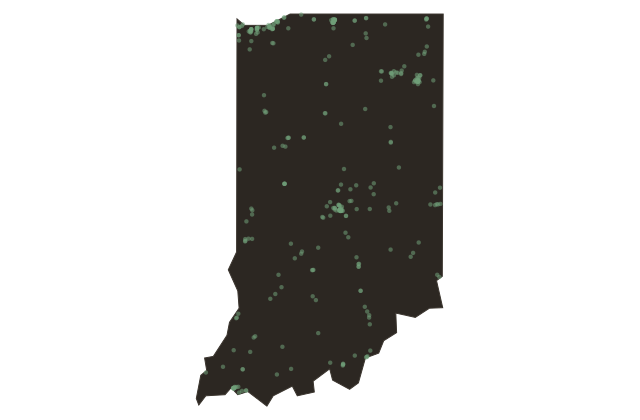
When Indiana entered the union in eighteen sixteen as a free state, it attracted a particular kind of settler who had been looking for free soil: Quakers. Beginning in the seventeen nineties and accelerating through the eighteen tens and twenties, Quaker families migrated from North Carolina and Virginia by the thousands, crossing the Ohio River to settle in the eastern and central counties, Wayne, Henry, Randolph, and Grant. They came in part because they had been disowned or pressured by their Southern meetings for the act of freeing their enslaved people, and Indiana's free-soil status offered them land where their convictions were legally supported.
The Quaker communities that took root in the Whitewater Valley and across the rolling farmland of east-central Indiana became some of the most active stations in the informal network known as the Underground Railroad. Levi Coffin, born in North Carolina and raised in the Quaker tradition, settled in Newport, now Fountain City, in Indiana in eighteen twenty-six. Over the following decades his home became a way station for freedom seekers traveling north.
Estimates credited him with helping more than three thousand people escape slavery over more than twenty years. Abolitionists called him the President of the Underground Railroad, a title he wore with characteristic Quaker discomfort. The Coffin House still stands in Fountain City, a Federal-style brick house that looks like nothing in particular from the road.
Hidden rooms, hollow walls, the practical architecture of people who understood that the law was wrong and acted quietly anyway. Indiana's Quaker communities also funded and founded several of the earliest schools open to Black students in the state, decades before public education integrated. They were not the only people who helped freedom seekers reach Canada.
But they were among the most organized, and they left behind towns and meetinghouses whose quiet architecture still speaks.