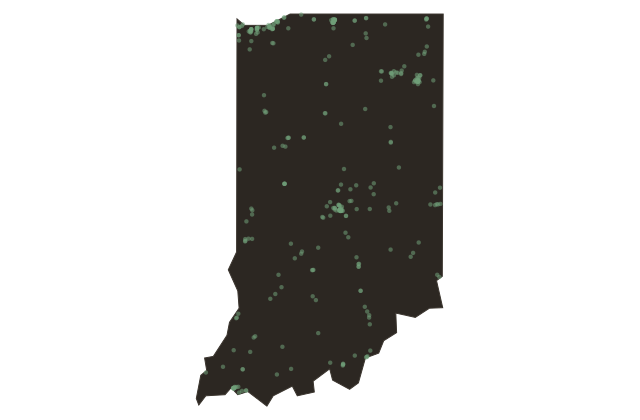
The People of the Three Fires, Indiana's Indigenous Nations
Indiana
Before the first township line was drawn, before the first survey stake was driven into the prairie, this land was home to nations whose names still echo across the map. The Miami lived here longest among the surviving record, along the upper Wabash and Maumee, in villages at the river confluences they called Kekionga and Ouiatenon and Atchatchakangouen. They were skilled traders and diplomats who played French, British, and American powers against one another for more than a century.
To the north, the Potawatomi called the region of lakes and dunes and river bends home. The Three Fires confederacy had roots stretching back generations before European contact. The Lenape, known also as the Delaware, had been pushed west from their original homelands along the Atlantic coast, arriving in the Ohio Valley and Indiana territory in the seventeen hundreds after decades of displacement.
The Kickapoo ranged across the prairie corridor. The Shawnee moved through the southern reaches. These were not simply hunters on open land.
The Miami maintained a sophisticated agricultural economy, permanent villages, and a diplomatic network that connected the Great Lakes to the Gulf of Mexico. Their principal town, Kekionga, sat at the exact spot where two rivers, the Saint Joseph and the Saint Marys, merged to form the Maumee, a geographic chokepoint worth fighting over, and worth defending. By eighteen forty, most had been removed by treaty and by force.
The Miami went to Kansas, the Potawatomi on the Trail of Death to Kansas and then to Oklahoma, the Lenape pushed farther and farther west. The Miami Nation of Indiana survived without federal recognition for generations, and have pressed for legal standing since the nineteen hundreds, still without federal recognition. Their presence shaped this land far longer than any state.