Bourbon, Water, and the Slow Alchemy of the Limestone Belt
Near Lexington, Kentucky
There is a reason that almost all of the world's bourbon whiskey is made within the state of Kentucky, and it comes back, again, to the limestone. Water that filters through a limestone aquifer arrives at the distillery with its iron content naturally reduced. Iron in fermentation water produces off flavors, dark, metallic notes that distillers have to work around.
Limestone-filtered water almost eliminates the problem at the source. The other conditions also converged here. Kentucky's climate, with its dramatic swings between summer heat and winter cold, drives bourbon in and out of the charred oak barrels that give it its color and character.
The spirit expands into the wood's pores in summer and contracts back in winter, pulling vanilla and caramel compounds out of the char with each cycle. Distillers call this the angel's share, the portion that evaporates through the wood over the years of aging. In Kentucky's climate, that share is significant, and so is what remains.
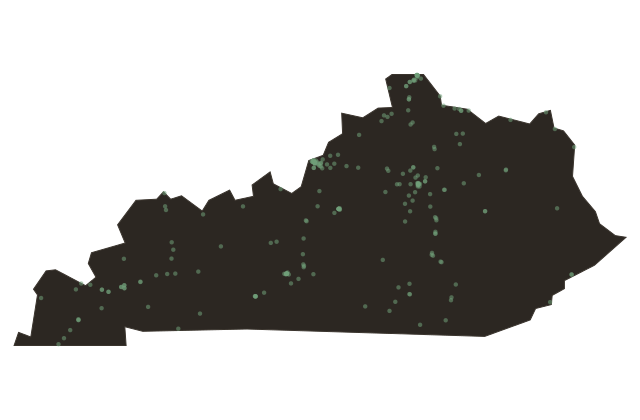
The distilling tradition in central Kentucky dates to the late seventeen hundreds, when Scots-Irish settlers brought their knowledge of grain-based whiskey from the mountain counties of western Pennsylvania and Virginia. The specific character of Kentucky bourbon, its corn-heavy mash bill, its new charred oak barrel requirement, its two-year minimum for the straight bourbon label, evolved from practice rather than regulation, and the regulations eventually caught up with the practice. Lexington is not itself a major distilling center, but it sits at the heart of the Bourbon Trail corridor.
The distilleries in the counties surrounding it, in Woodford, Anderson, and Nelson counties to the west and south, are expressions of the same limestone belt, the same water, the same slow alchemy that the Bluegrass has been performing for centuries.