Camp Dick Robinson: The First Union Camp South of the Ohio
Kentucky
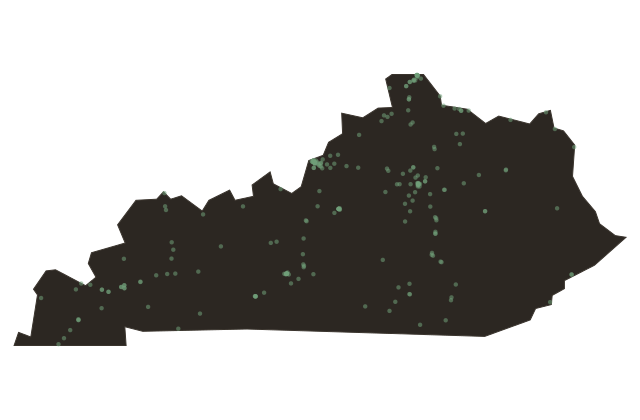
The land you are near in Garrard County carries a distinction that sounds modest until you think through its implications. In the summer of eighteen sixty-one, as the Civil War was just beginning, this farm became the first Union Army training camp established south of the Ohio River.
Kentucky occupied an extraordinary position at the outset of the war. The state formally declared neutrality in May eighteen sixty-one, refusing to take sides, and Governor Beriah Magoffin was a Confederate sympathizer who wanted that neutrality to hold. When President Lincoln authorized Major General William Nelson to establish a training camp on this Garrard County farm in early August eighteen sixty-one, Magoffin protested furiously. He called it a federal invasion of neutral soil.
The farm belonged to Richard M. Robinson, a staunchly pro-Union Kentuckian who offered his land and house as the campsite. The camp was named in his honor. Within weeks, Home Guard units were drilling here, and men who had slipped across the mountains from eastern Tennessee, where Unionist sentiment ran strong, began arriving to enlist.
That last point mattered enormously. East Tennessee was mountain country, where enslaved labor and plantation culture had taken far less hold. Thousands of those men wanted to fight for the Union but were surrounded by Confederate-leaning populations. Camp Dick Robinson became their destination, a place where they could cross into Kentucky and put on a Union uniform.
The irony of the story deepened in eighteen sixty-two. When Confederate General Braxton Bragg swept north through Kentucky during his invasion that autumn, Bragg ordered a Confederate training camp at or near the old site to be called Camp Breckinridge, after Confederate General and former U.S. Vice President John C. Breckinridge, himself a Kentuckian. The Confederates left it in October after the Battle of Perryville.
After the war the military purpose faded. What remained was farmland and the memory of an audacious decision made in defiance of a governor's orders, a decision that helped anchor Kentucky to the Union before the state ever made a formal choice.