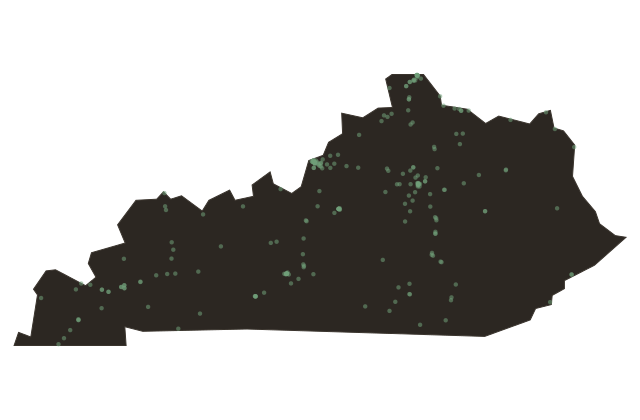
Coal, Appalachia, and the Harlan County Mine Wars
Kentucky
Eastern Kentucky sits on one of the largest coal deposits in North America. The seams run deep under the Appalachian ridges, some of them thin and hard to work, some thick and valuable, and beginning in the eighteen eighties, railroad companies and outside capital moved in to claim them. The transformation was faster and more total than almost anything else in American economic history.
Counties that had been subsistence-farming communities became company towns almost overnight. The company owned the land, the houses, the stores, the scrip that workers spent. You could be born, schooled, married, and buried without ever handling a coin that wasn't issued by the coal company.
Harlan County, in the southeastern corner of the state, became the symbolic center of what happened when miners tried to change that arrangement. The early nineteen thirties brought depression, wage cuts, and starvation conditions to the coal camps. When the United Mine Workers of America tried to organize Harlan County in nineteen thirty-one, the coal operators hired private guards and enlisted the county sheriff, himself on the company payroll, to suppress the effort.
The resulting period of violence and intimidation became known nationally as Bloody Harlan. Writers and journalists came. Theodore Dreiser organized a fact-finding committee in the fall of nineteen thirty-one; his delegation was arrested and run out of the county at gunpoint.
Florence Reece, wife of a union organizer, wrote Which Side Are You On in nineteen thirty-one after sheriff's deputies ransacked her house looking for her husband. The song became an anthem of the American labor movement. The organizing struggle continued through the nineteen thirties, the Union Contract Wars of the nineteen forties, and a violent wildcat strike in nineteen seventy-three and seventy-four documented in Barbara Kopple's Academy Award-winning film Harlan County, USA.
The coal is mostly gone now from the thinnest seams. The communities remain. The question the county has been asking since nineteen thirty-one, who benefits when a place's resources are extracted, has never fully been answered.