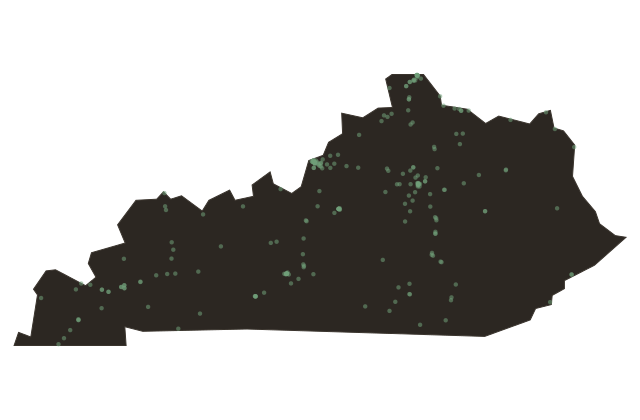
First West of the Appalachians, Statehood, Seventeen Ninety-Two
Kentucky
On June first, seventeen ninety-two, Kentucky became the fifteenth state of the United States, and the first carved entirely from territory west of the Appalachian Mountains. It was a milestone that felt, at the time, like the opening of a continent. The road to statehood had been unusually tangled.
Kentucky had been a county of Virginia since seventeen seventy-six, and Virginians with large land grants were in no hurry to give up control. Between seventeen eighty-four and seventeen ninety-two, Kentuckians held ten separate conventions debating statehood, fending off proposals, and negotiating the terms under which Virginia would let go. One faction, led by figures like James Wilkinson, briefly flirted with Spain, which controlled the Mississippi River mouth at New Orleans and therefore the only viable export route for Kentucky's grain, about becoming a Spanish protectorate.
That scheme came to nothing, but it illustrated how geographically isolated and economically precarious the new state was. The first governor was Isaac Shelby, a Revolutionary War veteran who had fought at Kings Mountain in seventeen eighty. The first state capital was Frankfort from the very start, a river town chosen partly because it was central, partly because its location on the Kentucky River offered defensive geography, and partly because Andrew Holmes offered his own log house, several town lots, building materials, and gold to secure the prize.
The seventeen ninety-two constitution was, by the standards of the day, distinctly conservative on the question of slavery. Virginia had exported both its institution and its ruling planter class across the mountains. Kentucky entered the Union as a slave state, and its founding document protected that status explicitly.
The contradictions that would define the next seventy years were baked in from the first day.