Portsmouth: The Floodwall and the Opioid Ground Zero
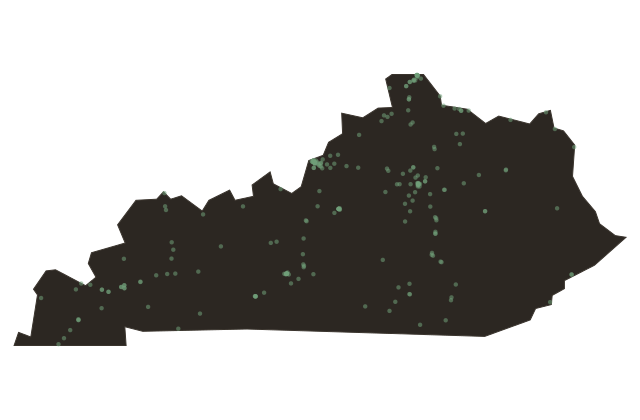
Kentucky
Portsmouth, Ohio sits at the confluence of the Scioto and Ohio Rivers, and its history is a compressed version of the American industrial arc, boom, infrastructure investment, industrial decline, and crisis.
Major Henry Massie laid out Portsmouth in eighteen oh three, naming it for his friend's hometown in New Hampshire. The city's first great leap came in eighteen thirty-two when the Ohio and Erie Canal opened and made Portsmouth a transfer point between canal barges and river packets. Shoe manufacturing, steel, and railroad commerce followed through the nineteenth and early twentieth centuries.
Then came the flood of nineteen thirty-seven. The Ohio River rose to catastrophic levels, twenty to twenty-eight feet above flood stage in some stretches, and Portsmouth was devastated. In the years after World War Two, the community built a floodwall seventy-seven feet high to protect the city's riverfront. That concrete wall, a massive engineering barrier between the city and the Ohio River, became an unexpected canvas.
Beginning in nineteen ninety-three, the city commissioned Louisiana muralist Robert Dafford to paint the floodwall with scenes from Portsmouth and Scioto County history. The project took a decade to complete. When finished, the murals stretched about two thousand feet along the riverfront at roughly twenty feet high, becoming one of the largest outdoor mural installations in the world. They are painted in a hyper-realistic trompe l'oeil style that creates the illusion of three dimensions, storefronts, steam trains, and river scenes that seem to push out from the concrete.
But Portsmouth in the nineteen nineties was also ground zero for something far darker. Scioto County became the first epicenter of the American opioid epidemic, driven by the collapse of manufacturing jobs and an oversupply of prescription painkillers from local pill mills. By the two thousands, the county had one of the highest overdose death rates in the nation. Journalists called it the epicenter. Researchers came here to study what was happening before anyone had a name for it.
The floodwall murals stand between the city and the river that once destroyed it. The opioid crisis was a flood that came from inside. Portsmouth is still recovering from both.