Goodrich's Landing: Black Soldiers and the Battle for Vicksburg
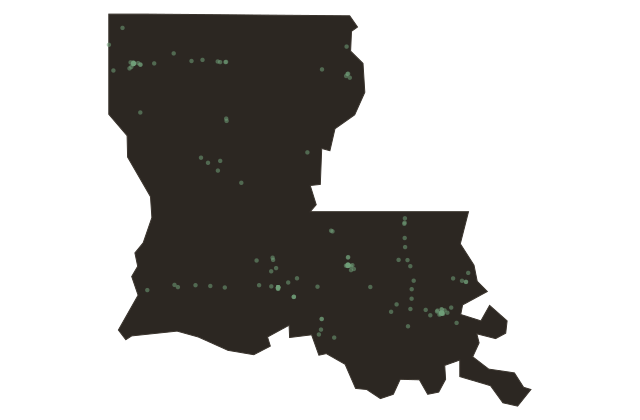
Louisiana
By the summer of eighteen sixty-three, the Union Army had besieged Vicksburg for weeks. The Confederate garrison inside the city was starving, and General Ulysses Grant had drawn a tight ring around the bluffs. The question was whether anyone could break that ring from the outside.
Along the Louisiana bank of the Mississippi, Confederate forces under Major General John Walker made a series of raids designed to disrupt Union supply lines and plantation-based encampments. Goodrich's Landing, on the west bank near where Route Sixty-Five runs today, was one of those targets.
What the Confederates found there surprised them. The garrison holding the position was the First Arkansas Infantry, African Descent. Most of them had been enslaved on the very plantations visible from this stretch of river. Organized just weeks earlier in May of eighteen sixty-three, most of the enlisted men were former slaves from the Mississippi River bottomlands. They had fortified a position on an Indian mound and were determined to hold it.
On June twenty-ninth, Confederate forces under Colonel William Henry Parsons reached the mound with Texas cavalry. They judged the position too strong to assault directly. After consultation with Arkansas infantry commanders, the Union troops on the mound were surrounded and forced to surrender.
Eyewitness accounts recorded afterward state that some of the Black enlisted men who surrendered were killed after the battle ended. This was a violation of the laws of war that reflected Confederate policy toward United States Colored Troops, who were not recognized as legitimate soldiers and were frequently murdered rather than held as prisoners.
The Goodrich's Landing area also served as a contraband camp in this period, a refugee settlement for enslaved people who had reached Union lines. The same operations that produced this battle were aimed in part at recapturing those people.
Vicksburg fell on July fourth, eighteen sixty-three. The Confederate raid at Goodrich's Landing had not broken the siege. But the men of the First Arkansas had held their position as soldiers, and their fight here was part of a larger argument, being made in blood, about who would fight for the Union and on what terms.