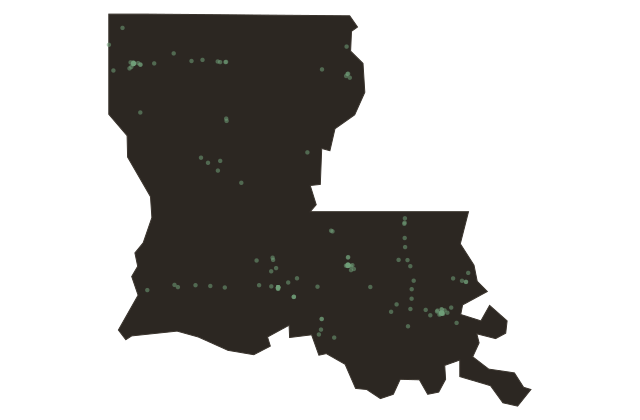
The New Orleans Slave Market
Louisiana
The buildings are still standing.
Walk the blocks around the French Quarter, along St. Charles Avenue, along the commercial streets between Canal Street and the river, and you are walking through what was, by the eighteen fifties, the largest slave-trading market in North America. Between eighteen twenty and eighteen sixty, an estimated one hundred thirty-five thousand enslaved people were bought and sold in the city of New Orleans. The primary trading venues were the St. Charles Hotel rotunda, the Exchange Alley auction rooms, and the commercial blocks near the French Quarter that catered to planters arriving from upriver to purchase labor for their cotton and sugar operations.
Louisiana's legal system, rooted in the Napoleonic Code rather than English common law, required that every sale of property be registered with a notary. Enslaved people were property. Their sales are therefore in the Louisiana notarial archives in a detail that does not exist for the slave markets of other Southern cities: names, ages, estimated abilities, prices paid, which family members were sold in the same transaction and which were separated. The Whitney Plantation Museum and the Louisiana State Museum have drawn on these archives to reconstruct individual human lives from commercial records.
Almost none of the buildings where those sales took place carry markers. The St. Charles Hotel is long gone. The Exchange Hotel on St. Louis Street, where auction rooms operated, is a restaurant now. The streetscape of the French Quarter that draws millions of tourists every year is substantially the same streetscape in which one hundred thousand people were reduced to line items in a ledger. New Orleans does not hide this. It also does not, for the most part, name it.
The notarial records are still in the archives. The names are still there for anyone who wants to read them.