Maine Becomes a State, The District Breaks Free
Maine
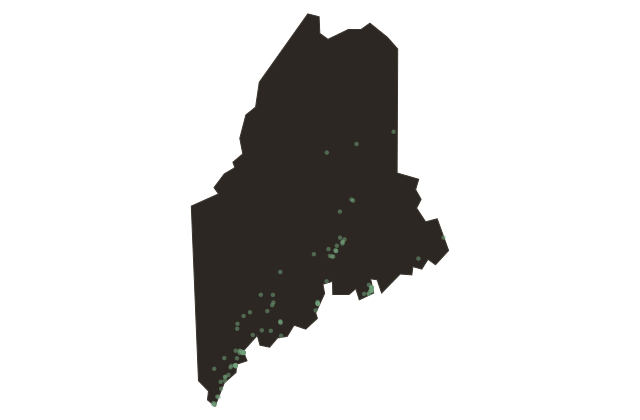
Maine had been part of Massachusetts since sixteen fifty-two, when the Massachusetts Bay Colony absorbed the scattered settlements of what had been the Province of Maine. For nearly a hundred and seventy years, the residents of Maine paid taxes to Boston, were represented in a legislature that met in Boston, and watched as Massachusetts used Maine's vast timberlands and fisheries to fund an economy centered far to the south. The complaints about Massachusetts governance were old and familiar by the time they finally produced action.
The push for separation was not continuous but episodic. Residents voted on the question in eighteen oh seven and rejected it. They voted again in eighteen sixteen and rejected it again. The war of eighteen twelve interrupted everything. But by eighteen nineteen the movement had momentum: the economy of the Maine district was distinct from the coastal trading cities of southern Massachusetts, the population had grown to roughly three hundred thousand people, and the political arguments for self-governance had accumulated for generations.
What finally unlocked Maine statehood was not anything Maine did. It was the Missouri Compromise. The United States Senate was evenly balanced between free states and slave states, and adding Maine as a free state would tip that balance unless a slave state entered simultaneously. The compromise arranged the pair: Maine entered the union as a free state on March fifteenth, eighteen twenty. Missouri entered later the same year as a slave state. Maine's freedom from Massachusetts was purchased, in constitutional terms, as the counterweight to Missouri's slavery.
The long wait produced something. Maine did not arrive at statehood as a colonial creation, the way younger western territories did. It arrived as a mature place that had been governing itself informally for generations, that knew its own economy, its own geography, and its own political culture. The awkwardness of being a distant appendage of Massachusetts had forced Maine to develop institutions of self-reliance that served it when independence finally came. What the state did with that independence is the rest of the story.