The Ice Harvest, Selling Winter to the World
Maine
In January of eighteen oh six, a Boston merchant named Frederic Tudor loaded one hundred thirty tons of ice cut from a Massachusetts pond onto a brig and sailed for Martinique. The islanders did not know what to do with it. Most of it melted before anyone found a use. Tudor lost nearly five thousand dollars on the voyage. He kept going anyway, and after further losses on later shipments, he spent time in debtor's prison a few years afterward.
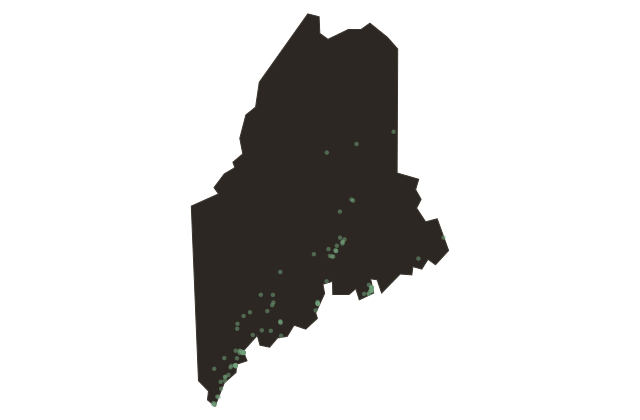
Within a generation, Frederic Tudor had built the global ice trade, and the Kennebec River in Maine had become its manufacturing center. The cold winters, the clear slow-moving water that froze to exceptional thickness and purity, and the proximity to the sea made the Kennebec ideal. By the eighteen eighties, hundreds of icehouses lined the river from Richmond to Gardiner to Pittston, their pine walls packed with sawdust insulation, their floors covered with blocks of river ice cut to the standard dimension of twenty-two by thirty-two inches. In the peak years around eighteen ninety, the Kennebec shipped well over a million tons of ice per year.
The harvest was a winter ritual that employed hundreds of men and teams of horses. Workers scored the ice in a grid pattern using horse-drawn cutters, then sawed the blocks free, floated them to an elevator, and packed them into the icehouses in stacked rows. It was cold, wet, and demanding work that paid better than most farm labor. The ice went to Boston and New York in vast quantities, and from those ports on to the Caribbean, South America, India, China, and Australia. Surgeons in Calcutta used Maine ice to pack wounds. Breweries in New Orleans chilled their fermentation tanks with Kennebec blocks. The ice trade was one of the first American industries to achieve genuine global scale.
Mechanical refrigeration killed it. By the nineteen tens, the technology had matured enough to undercut natural ice on cost, and within a decade the icehouses stood empty. Most burned or rotted. A few foundations remain along the Kennebec riverbank, half-buried in vegetation, the only physical trace of an industry that once cooled the world.