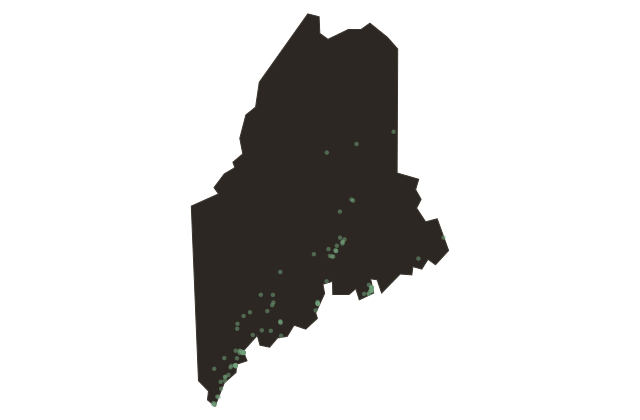
The Wabanaki Confederacy, People of the Dawn
Maine
The sun rises over Maine before it touches any other piece of the lower forty-eight states. The Wabanaki knew this. Their name for themselves translates, in the most common rendering, as the People of the Dawn. It is a name rooted in geography, in the fact that this coast faces east toward open water, toward the first light. They were here when the glaciers retreated, more than twelve thousand years ago, and they are here now.
The Wabanaki Confederacy is not a single tribe but a political alliance of distinct nations sharing language roots, territory, and the diplomacy required to survive centuries of pressure from every direction. The five nations of the confederacy are the Penobscot, the Passamaquoddy, the Maliseet, the Mi'kmaq, and the Western Abenaki. Each maintained its own government, its own ceremonies, its own river systems and coastlines. The Penobscot built their world around the great river that still bears their name, ranging from its mouth at Penobscot Bay deep into the interior forests. The Passamaquoddy worked the tidal waters and salmon rivers of the state's eastern edge, near what is now the Canadian border. The Maliseet, known in their own language as the Wolastoqiyik, or people of the beautiful river, ranged the Saint John River drainage. The Mi'kmaq occupied the northeastern maritime edges of the continent, straddling what became the border with Nova Scotia. The Western Abenaki held the inland and western reaches, the Connecticut River headwaters and the lake country of what is now New Hampshire and Vermont.
The confederacy was not static. It adapted to the devastating epidemic diseases that swept the coast after European contact in the early sixteen hundreds. In some areas, as many as nine out of ten people died within a generation of first contact, before sustained settlement even began. The survivors reorganized, built new alliances, and maintained the confederacy's political coherence through nearly four centuries of sustained colonial pressure. The Penobscot Nation today governs from Indian Island in the Penobscot River. The Passamaquoddy operate two reservations at Pleasant Point and Indian Township. Together with their confederacy partners, they remain the foundational human presence of this landscape, older than any name on any map.