Druid Hill Park: Baltimore's Common Ground
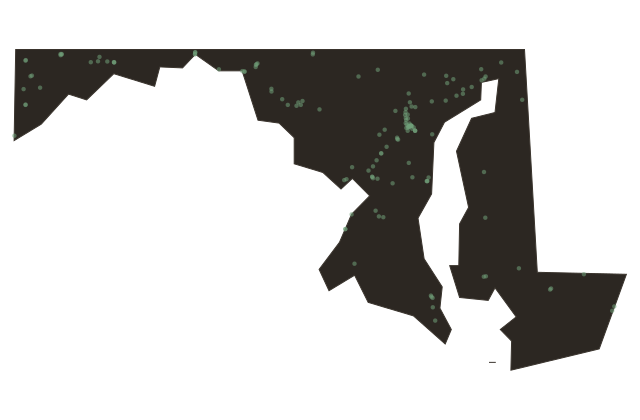
Maryland
Druid Hill Park is one of the oldest large public parks in the United States, and its history touches almost everything Baltimore has been through since the Civil War.
The land began as a private estate. The earliest portion was part of Auchentorlie, the holdings of Dr. George Buchanan, one of the seven commissioners who helped establish Baltimore Town in seventeen twenty-nine. The property passed through families over the generations, eventually reaching Lloyd Rogers. In eighteen sixty, Baltimore City bought it from Rogers, funding the purchase with a one-cent tax on every horse-car fare in the city. When Mayor Thomas Swann dedicated the park on October nineteenth of that year, Baltimore joined New York's Central Park and Philadelphia's Fairmount as one of the first major American cities to create a public green space at this scale.
The park was designed by landscape architect Howard Daniels and featured carefully composed drives, a formal lake, and a conservatory, later joined by what became the Maryland Zoo, one of the oldest zoos in the country, dating to eighteen seventy-six.
But Druid Hill's history is also a record of the city's racial fault lines. For nearly a century after the park opened, Baltimore maintained strict segregation within its boundaries. Black residents, who had always visited the park, were confined to separate swimming pools, tennis courts, and playgrounds located in the west central section of the grounds. White facilities occupied the rest. That arrangement held until the nineteen fifties, when the parks were finally desegregated.
The park today spans seven hundred forty-five acres of woods, meadows, and reservoir. Its Victorian structures still stand: the arched gateways, the old mansion, the conservatory. It remains the anchor of northwest Baltimore, a piece of nineteenth-century civic ambition still in daily use.