Maryland's Border: The State That Stayed
Maryland
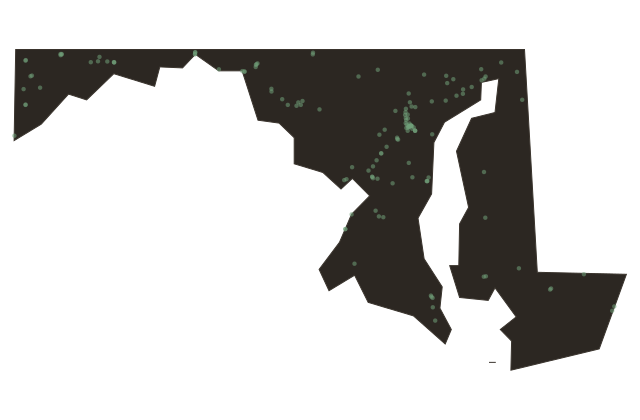
In April of eighteen sixty-one, the state of Maryland very nearly left the United States.
Secession sentiment in Maryland was concentrated and intense in the tobacco counties of the Western Shore, where the economy was built on enslaved labor. Baltimore, a city with deep commercial ties to the Deep South, had an active pro-Confederate political faction. When the Sixth Massachusetts Infantry marched through Baltimore on the nineteenth of April, eighteen sixty-one, eight days after Fort Sumter, a pro-Confederate mob attacked the column with cobblestones and pistol fire. Four soldiers and at least twelve civilians died. It was the first bloodshed of the Civil War.
President Abraham Lincoln understood that if Maryland left the Union, Washington would be surrounded by Confederate territory on three sides and the war would be functionally over. In the weeks that followed the Baltimore riot, Lincoln suspended the writ of habeas corpus along the rail corridor between Philadelphia and Washington, allowing the military to arrest suspected secessionists without trial. Governor Thomas Hicks, who was a Unionist, refused to call a special session of the legislature that secessionists were demanding. When the legislature did convene, federal troops were in the surrounding hills.
The Maryland legislature voted not to secede, but the pressures that had created the crisis did not disappear. Throughout the war the state was divided against itself. Estimates vary widely, but as many as twenty-five thousand Marylanders may have fought in the Confederate Army. A somewhat larger number fought for the Union. Families were split. Counties were split. The Eastern Shore, with its proximity to Delaware and its large free Black population, was more firmly Unionist than the tobacco counties to the west.
The decision to stay was not a moral awakening. It was a calculation, made under military pressure, in a state where the majority of white voters were not abolitionists and where enslaved people had no vote. Maryland did not free its enslaved population until November of eighteen sixty-four, passing emancipation by a margin of three hundred and seventy-five votes out of nearly sixty thousand cast.