The Eastern Shore Underground Railroad
Maryland
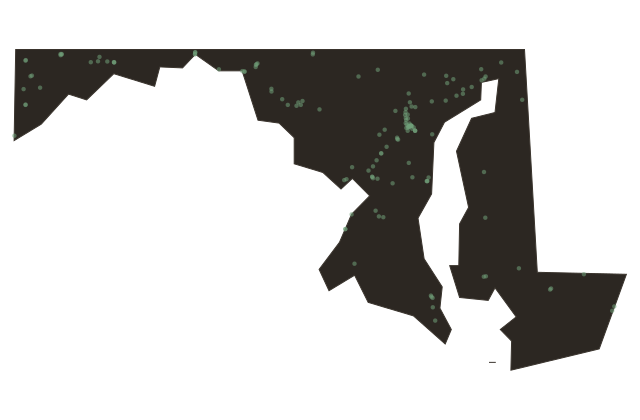
The Eastern Shore of Maryland was not simply the place Harriet Tubman escaped from. It was a geography that produced the Underground Railroad's most organized and durable network in the mid-Atlantic. The flat tidal terrain, the dense network of creeks and rivers, the communities of free Black people at every crossroads town, and the proximity to the free states of Pennsylvania and Delaware combined to make the Eastern Shore both a place of profound oppression and a corridor of resistance.
The network that moved freedom seekers north was not a single organization with a central registry. Historians, working from court records, Quaker meeting minutes, abolitionist correspondence, and the memoirs of people who used the network, have documented a web of safe houses, guides, and contacts stretching from the tidewater counties north to the Pennsylvania line. The precise extent of that network is unknown. Sources disagree on the number of active conductors, the number of stations, and the routes used in any given year, because the participants were careful to leave no written records that could be used against them in court.
What the documents do show is a community effort. Free Black watermen transported people across the bay and up the rivers. Quaker families in Dorchester, Caroline, and Queen Anne's Counties provided shelter and food and information about patrol routes. African Methodist Episcopal churches served as organizational nodes. Thomas Garrett, a Quaker stationmaster in Wilmington, Delaware, just across the line, helped more than two thousand people reach freedom by his own count. He went to trial for it, was fined so heavily by a federal jury that he said it left him without a dollar, and told the court he intended to continue.
Tubman was the most famous figure in this network, but she was not alone. She operated within a community of resistance that had been building for decades before she made her first crossing in eighteen forty-nine, and that continued for years after she stopped running missions in eighteen sixty.