King Philip's War
Near Plymouth, Massachusetts
In the summer of sixteen seventy-five, a sachem named Metacom rode out from his home at Mount Hope, near what is now Bristol, Rhode Island, and began a war he knew he was likely to lose. The English called him King Philip. His people called him by his Wampanoag name. He had watched English settlers claim more land with each passing decade, seen the colonial courts impose English law on Wampanoag people, and understood that at the rate things were going, his nation would be dispossessed within a generation. He chose war.
What followed was proportionally the deadliest conflict in American history. Scholars estimate that between six hundred and six hundred and fifty English colonists died in battle; at least that many more died from disease, exposure, and the destruction of frontier settlements. For the Wampanoag and their Algonquian allies, the losses were catastrophic. Historians working from multiple sources estimate three thousand or more Native Americans killed, warriors and noncombatants together, men, women, and children, dead in combat, from starvation, exposure, and the violence of a colonial war that made no distinction between fighters and families.
What the English did with the survivors is a history that is rarely told in the same breath as the Pilgrims and the Mayflower Compact. Captured Wampanoag people, including women and children, were sold into slavery in the Caribbean and the Mediterranean. Metacom's own wife and young son were taken and sold. Metacom himself was killed in August of sixteen seventy-six, shot by a Wampanoag man fighting on the English side. His body was drawn and quartered in the English manner of treating traitors. His head was mounted on a pike at the entrance to Plymouth, where it remained for twenty-five years.
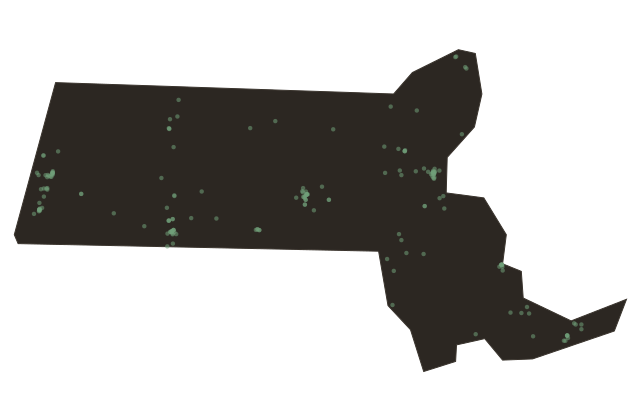
The war ended the Wampanoag as a political power in southern New England. Within two generations, the English had absorbed virtually all the land that Metacom had fought to preserve. The specific battle locations within the broader Plymouth Colony corridor are not all documented at the level of modern GPS coordinates, but the territory Metacom defended covered most of what is now eastern Massachusetts and Rhode Island, the same ground where the Pilgrims' story is told as a narrative of peaceful founding.
Understanding King Philip's War does not cancel the earlier story. It completes it.