The Arsenal on the Hill
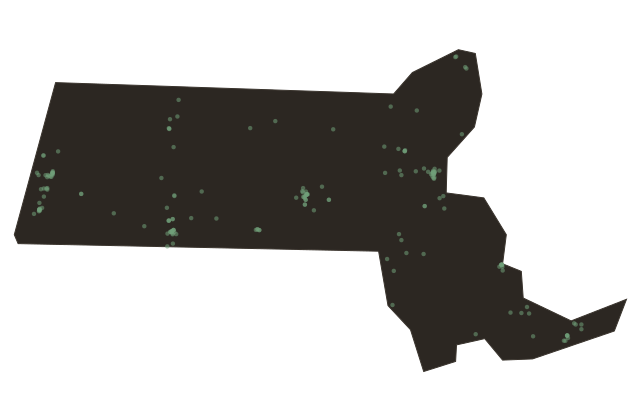
Near Springfield, Massachusetts
Long before the city had a name that stuck, people recognized this particular hill. Henry Knox, who had dragged captured British cannon across frozen Lake George and the Hudson River to force the British out of Boston, studied the bluff above the Connecticut River in seventeen seventy-seven and chose it for a different kind of fortress. Not a fighting fort, a factory.
A place to make the weapons a new republic could not yet buy from anyone who wished it well. The Springfield Armory became the first national armory in the United States, made a national armory by Congress in seventeen ninety-four. For nearly two centuries, every major American war turned in part on what this hilltop produced.
Flintlock muskets gave way to percussion rifles, which gave way to breach-loaders and bolt-actions. The armory did not merely manufacture firearms, it invented the industrial logic that made mass production possible in America. In eighteen nineteen, an inventor named Thomas Blanchard installed a copying lathe here that could trace the irregular shape of a wooden rifle stock and reproduce it exactly, thousands of times over.
That single machine became the template for what historians call the American System of manufacturing, the idea that any part of any machine should be interchangeable with the same part from any other machine. Springfield did not just make guns. It made the idea of the assembly line.
When the armory closed in nineteen sixty-eight after nearly two centuries, the National Park Service stepped in. The museum that sits here today holds the largest collection of American military small arms in the world. Walk through it and you walk through the armory's own logic, the steady, patient accumulation of lethal precision, improved one iteration at a time, on this one hill, for nearly two centuries.