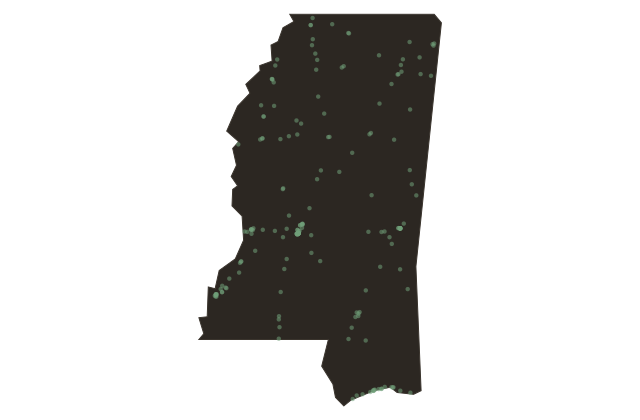
Freedom Summer, Nineteen Sixty-Four
Mississippi
In the summer of nineteen sixty-four, more than seven hundred mostly white college students from the North came to Mississippi to join the civil-rights movement's voter registration campaign. The Student Nonviolent Coordinating Committee and the Council of Federated Organizations had designed the project deliberately: they calculated that the deaths of white students from prominent families would force national press coverage and federal action in ways that the murders of Black Mississippians had not.
On June twenty-first, the summer's first day of work, three organizers, James Chaney, a twenty-one-year-old Black Mississippian from Meridian; Andrew Goodman, a twenty-year-old white student from New York; and Michael Schwerner, a twenty-four-year-old white organizer from Brooklyn, were arrested near Philadelphia, Mississippi, released after dark, and then murdered by Klan members that night. Chaney, Goodman, and Schwerner were reported missing on June twenty-second. Their bodies were found buried in an earthen dam forty-four days later, on August fourth, after a federal investigation.
The Klan did not stop there. Freedom Summer volunteers faced daily violence, arson, and arrest across the state. Thirty-seven Black churches were bombed or burned during the summer. More than sixty Freedom Summer workers were beaten. The state deployed every legal and extralegal tool available to suppress registration.
And yet: by the end of the summer, the work had enrolled thousands of new voters, launched Freedom Schools that educated students who had been failed by the segregated system, and generated enough national pressure that the Civil Rights Act had already passed in July and the Voting Rights Act would follow in nineteen sixty-five. The murders of Chaney, Goodman, and Schwerner were exactly what the organizers had predicted they might be: a sacrifice that moved a nation.
In two thousand five, Edgar Ray Killen, a Baptist preacher and Klan organizer in Neshoba County, was convicted of three counts of manslaughter for his role in the killings. He was eighty years old at both his conviction and his sentencing.