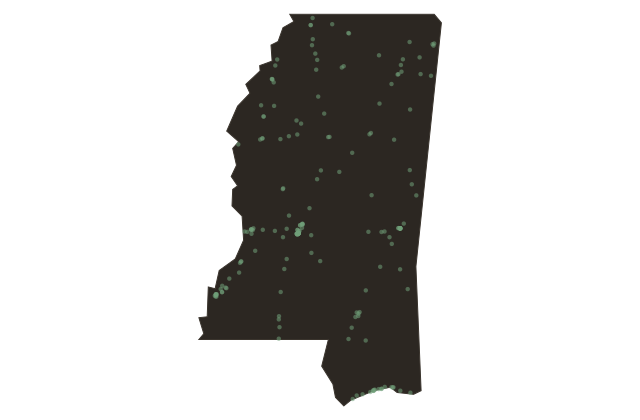
Gulfport and the Banana Trade
Near Biloxi Gulfport, Mississippi
Gulfport was not an accident of geography. It was a deliberate act of commerce.
In eighteen eighty-seven, a railroad magnate named William Harris Hardy, who had already founded Hattiesburg by the same logic of building towns along tracks he controlled, began promoting a scheme for a new deep-water port on the Mississippi Gulf Coast. The natural ports at Biloxi and Pass Christian were too shallow for the large oceangoing steamships that the late-nineteenth-century export economy required. Hardy's plan called for dredging a deep channel and building a modern port facility from scratch, surrounded by a planned city.
By nineteen oh two, Gulfport had a functioning deep-water port, a rail connection to Jackson and the interior of Mississippi, and a timber trade that sent Southern pine lumber to markets across the Gulf and the Caribbean. The port was efficient and relatively new, which gave it advantages over older Gulf Coast facilities.
A first attempt at a banana trade began in nineteen twenty but failed within a few years, and the trade took hold for good in the nineteen sixties. Standard Fruit moved its New Orleans operations to Gulfport in the nineteen sixties, and United Fruit, which controlled vast plantation operations in Central America and the Caribbean, followed, finding in Gulfport a capable port with the rail links needed to move perishable cargo quickly inland. Refrigerated railcars had made it possible, for the first time, to ship bananas to the American interior before they spoiled. Gulfport became one of the companies' primary unloading points on the Gulf Coast, a node in a supply chain that stretched from Honduran and Guatemalan plantation workers through Gulfport dockworkers to grocers in Memphis and Saint Louis.
The banana trade grew through the late twentieth century and gave Gulfport a particular character. The port made the city more connected to the Caribbean and Latin American economies than most Mississippi towns were or have ever been. The deep-water port still operates today, handling a diverse cargo mix. The banana trade, though much reduced, has not entirely disappeared.