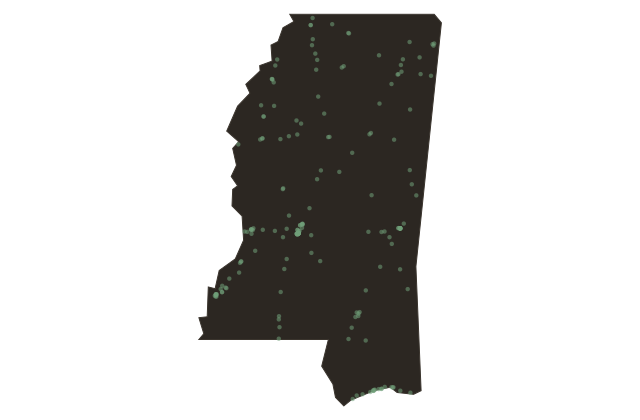
Where the Blues Was Born
Mississippi
On a map of American music, Mississippi is the wellspring. The blues did not arrive fully formed at a single crossroads. It grew across the Delta and the hill country over decades, out of field hollers, work songs, church music, and the string-band traditions that enslaved people and their descendants carried and transformed. By the eighteen nineties, something recognizable as the blues was alive in the cotton camps and juke joints of the Mississippi hills and flatlands.
The musicians who shaped it came from across the state. Charley Patton, born in Hinds County around eighteen ninety-one, became the first great Delta bluesman we can name and document, his voice a rough growl that seemed to come from the earth itself. He recorded for Paramount Records beginning in nineteen twenty-nine, and his recordings captured a tradition already old. Son House, born in Coahoma County in nineteen two, brought a ferocity to the bottleneck slide that would echo for a century. Robert Johnson, born in Hazlehurst in nineteen eleven, recorded twenty-nine songs in nineteen thirty-six and nineteen thirty-seven that became the bedrock of rock and roll; his deal-with-the-devil legend grew after his death in nineteen thirty-eight, but the music itself needed no mythology.
The hill country blues tradition, centered in the Benton County area, produced a different sound: more hypnotic, more African in its drone and repetition. Mississippi Fred McDowell, born in Rossville, Tennessee but a lifelong Mississippian, carried that tradition into the nineteen sixties revival, where the Rolling Stones and Bonnie Raitt listened and learned.
Muddy Waters left Clarksdale for Chicago in nineteen forty-three. B.B. King left Itta Bena for Memphis. The music went with them, plugged in, and became something that changed the world. The ground it grew from is right here.