Hannibal: The River Town Before the Legend
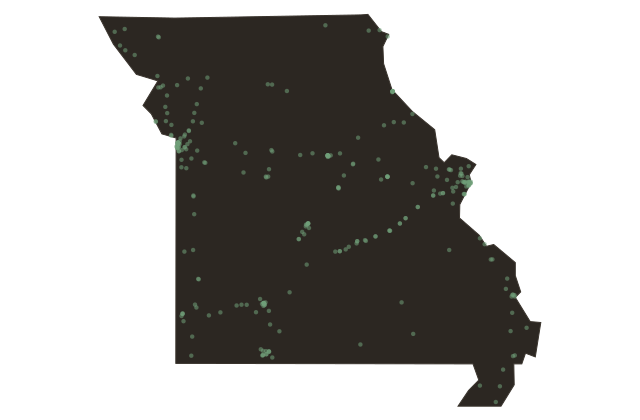
Near Hannibal, Missouri
Hannibal sits on the west bank of the Mississippi River in northeastern Missouri, at a point where the great river runs wide and swift between limestone bluffs. The town owes its name to a man named Moses Bates, who surveyed and settled the site in eighteen nineteen and named a local creek Hannibal after Hannibal Barca, the general of ancient Carthage who crossed the Alps with elephants to fight Rome. Bates platted a town on that creek's bank, and the name transferred to the settlement.
The Mississippi made Hannibal possible and prosperous. By eighteen thirty, the town had about thirty residents. By eighteen forty five it had achieved city status.
By eighteen sixty, it was the second largest city and third largest commercial center in the entire state of Missouri. The river was the reason. Steamboats ran continuously day and night, carrying cotton, tobacco, lumber, and manufactured goods between New Orleans and the cities of the upper Midwest.
Flat boats laden with grain and hemp tied up at the waterfront. Livestock driven in from the surrounding country were sold here. Logs floated down from Wisconsin and Minnesota were converted into boards at sawmills along the bank.
Contemporary records from the period describe Hannibal as having two very extensive pork packing establishments, tobacco factories, flouring mills, saw mills, a rope manufactory, and soap and candle works. It was a working industrial river town, clattering and smelling of the river and the stockyards. In eighteen thirty nine, a tannery owner named John Marshall Clemens moved his family to Hannibal.
His young son Samuel was three years old. Samuel Clemens would spend fourteen years here, from age four to seventeen, attending a one room school, swimming in Bear Creek, playing on the limestone bluffs above the river, and absorbing the life of this antebellum Missouri port town in every detail. When he came back to himself on the page decades later, under the pen name Mark Twain, he brought the whole town with him.
The river is still here. The bluffs are still here. The boy who grew into America's most celebrated author was shaped by this particular bend in the Mississippi.