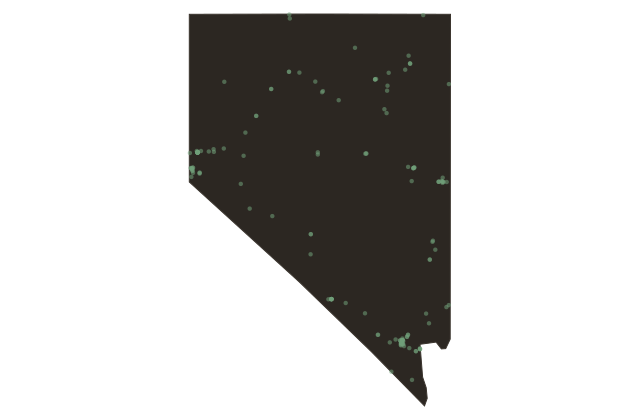
Bortle Class One, The Darkest Sky in America
Near Great Basin Np, Nevada
The Bortle scale measures the darkness of a night sky from one to nine, one being the darkest possible and nine being the inner-city sky, where you can see the moon and a handful of the brightest stars. Most places where people live fall between five and seven. Major urban areas sit at eight or nine. A true Bortle Class One sky, visible from only a handful of places in the contiguous United States, looks nothing like the sky most Americans have seen in their lifetimes.
Great Basin National Park is rated Bortle Class One on clear nights. On those nights, thousands of individual stars are visible to the naked eye. The Milky Way is not a faint smear but a structural feature of the sky, with dark lanes and bright concentrations resolving into something that looks three-dimensional. The Andromeda galaxy is visible without any equipment, two and a half million light-years away. The Triangulum galaxy, even farther, is at the edge of naked-eye visibility on the best nights.
The park received International Dark Sky Park designation from the DarkSky Association in two thousand sixteen, formalizing what the absence of streetlights had always provided. The Great Basin Observatory, a joint project of the Great Basin National Park Foundation and the park itself, opened after that designation and is the only research-grade telescope located inside the boundary of any national park in the United States.
The isolation of this corner of Nevada is the same isolation that makes the observatory possible. The nearest significant population center is hours away. There are almost no lights between Baker and the horizon in any direction. On a clear September night at the Wheeler Peak Campground, the sky is the dominant experience. Not the mountains. Not the trees. The sky.