Gigafactory Nevada: The Battery Plant That Rewired a County
Near Reno, Nevada
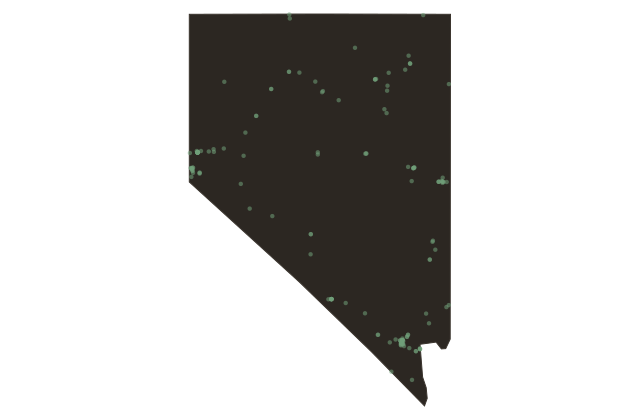
Twenty miles east of Reno, rising out of the high desert of Storey County like a vision from a different century, sits a building so large it ranks among the biggest structures by floor area on the planet. Tesla's Gigafactory Nevada covers more than five point four million square feet. When it reaches full production, its designers say it will be the highest-volume battery manufacturing facility in the world.
The story of how this came to be starts in two thousand fourteen, when Tesla announced it needed a massive factory to supply lithium-ion battery cells for the Model Three, a car it was promising to sell at a price ordinary consumers could afford. States across the country bid aggressively for the project. Nevada won with a package of incentives worth roughly one point three billion dollars, approved by the Legislature in a special session. Construction broke ground in mid-two thousand fourteen.
Tesla built the facility in partnership with Panasonic, which operates battery cell production lines within the factory walls. The plant sits not in Washoe County, home to Reno and Sparks, but in Storey County, a sparsely populated former mining county that had been largely dormant for a century. Unemployment there plummeted almost immediately. Housing prices in the surrounding region surged. A county that had once been defined by the ruins of the Comstock Lode silver boom found itself at the center of the electric vehicle revolution.
Production of battery cells began in two thousand seventeen. The factory also builds Tesla Powerwall and Powerpack storage products. Plans filed as recently as two thousand twenty-three call for a multi-billion-dollar expansion that would roughly double the facility's capacity.
The landscape around the Gigafactory is scrub and rock and mountain. It is the same terrain the Donner Party crossed in eighteen forty-six, the same terrain the transcontinental railroad conquered in eighteen sixty-nine. Each era has its own way of asking the desert to carry the weight of American ambition.