The Biggest Little State, What Nevada Actually Is
Nevada
Nevada is a strange idea for a state. About eighty percent of its land is owned by the federal government, the highest proportion in the lower forty-eight. Most of that land is managed by the Bureau of Land Management, which means it belongs to everyone and no one, held in a permanent ambiguity that shapes the state's politics to this day.
The ranchers who graze cattle on it resent the oversight. The mining companies that extract from it negotiate endlessly for access. The Shoshone and Paiute nations, whose treaty rights over much of that same land have never been formally extinguished, continue to press their claims in federal court and in the streets.
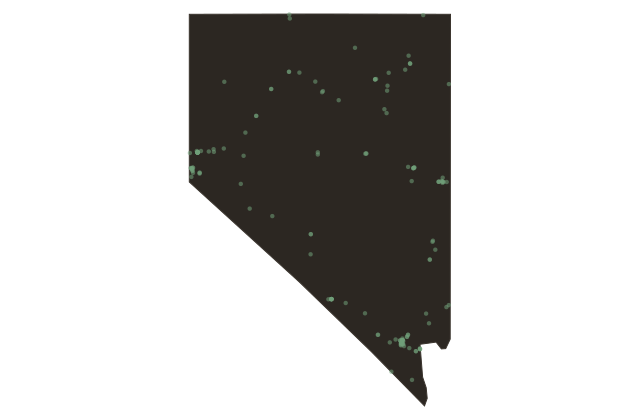
Nevada is the seventh largest state by area and has one of the smallest rural populations. Roughly ninety percent of the state's three point two million people live in two counties: Clark County, where Las Vegas is, and Washoe County, where Reno is. Everything between and beyond those two poles is a kind of vast administrative outback, small towns with big distances between them, cattle ranches on federal leases, military test ranges that take up more acreage than some eastern states, and ancient playa lake beds where land speed records are set and forgotten.
The state nickname is the Silver State, though Nevada now produces more gold than silver, and has for decades. It is also known, especially in the mining and energy sectors, as the Lithium State, because the flats of Clayton Valley contain some of the largest lithium deposits in North America, essential to the batteries that will power the next century's vehicles. Boom and bust, boom and bust, but the mineral changes each time.
Nevada is also the state where the rest of America comes to do what it cannot do at home. Gamble. Get divorced fast.
Test weapons. Store radioactive waste. The state takes the transactions seriously and does not apologize for them.
That is a kind of integrity, if not the conventional kind.