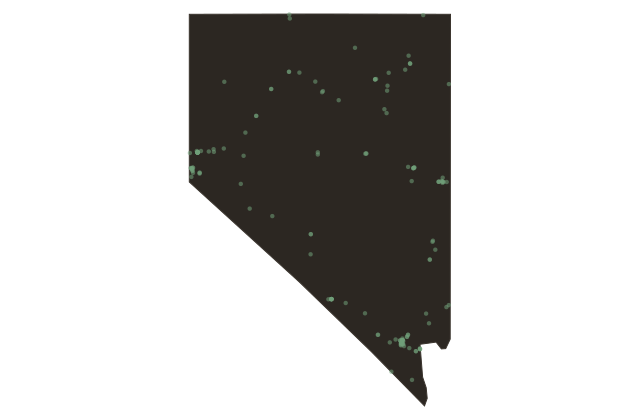
The Old Spanish Trail and Rafael Rivera, 1829
Nevada
In the autumn of eighteen twenty-nine, a scout named Rafael Rivera separated from the Antonio Armijo trade expedition somewhere in the Mojave Desert and found what he was looking for: freshwater.
The springs he documented were not a discovery in the sense that word usually implies. Southern Paiute peoples had known about them, relied on them, and built seasonal camps around them for centuries. Rivera was looking for a reliable water source that a trade expedition could use on the overland route between Santa Fe and Los Angeles, and what he found had been known to the people who lived in this desert long before any Spanish expedition set out from New Mexico.
What Rivera's documentation did was incorporate the Las Vegas Springs into the Spanish colonial trade network. The route his expedition established became part of what traders called the Old Spanish Trail, the principal overland path connecting New Mexico to California from the eighteen twenties through the eighteen forties. Traders moved wool blankets west and horses and mules east, along a route that passed through some of the most demanding terrain in North America.
Some historians question whether Rivera personally reached the springs or received a report from Indigenous guides who knew the location. The primary expedition record, if it survives, has not been fully examined in publicly accessible scholarship. The Springs Preserve, built on the site of those springs two miles west of the Strip, marks Rivera's documentation as the beginning of Las Vegas's recorded history. That recorded history is not the same thing as the actual history, which goes back much further.