Secaucus: From Hog Capital to Meadowlands Hub
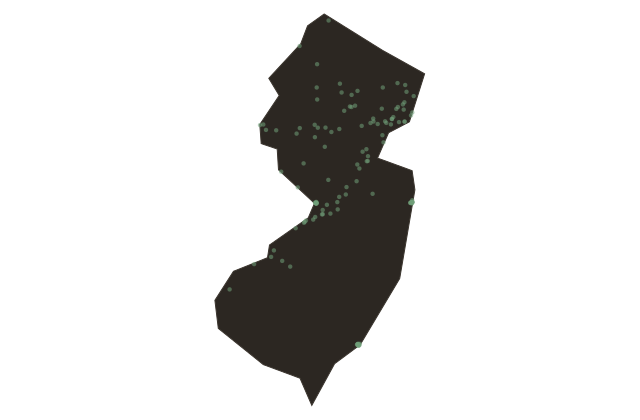
New Jersey
The community you are passing through had a reputation that preceded it by miles, in the most literal olfactory sense. Secaucus, sitting in the marshy flatlands between the Hackensack River and the Hudson, spent the first half of the twentieth century as the hog capital of the eastern United States. By the Second World War, the pigs on the farms that spread across the tidal meadows outnumbered the human population sixteen to one. On certain summer days, the smell reached Manhattan.
The land itself has been in use since long before the hogs arrived. Peter Stuyvesant, the last director-general of New Amsterdam, bought the Secaucus territory in sixteen fifty-eight, seeing value in the waterfront access to New York markets. Through the eighteenth and nineteenth centuries it was truck-farming country, growing vegetables and flowers in greenhouses that fed the city across the river. Hog farming arrived as an industrial extension of that same logic: there was always kitchen waste and market scraps from New York City, and the meadows were cheap.
The transformation came with the New Jersey Turnpike, whose eastern segment cut along the edge of the Meadowlands in the nineteen fifties, and with the creation of the New Jersey Sports and Exposition Authority in nineteen seventy-one. The state broke ground on Giants Stadium and the Meadowlands Racetrack in November nineteen seventy-two, and within a decade the marshes and pig farms had given way to one of the most commercially developed sports and entertainment corridors in the country.
Secaucus today is a town of shopping outlets, distribution centers, and the junction transfer station that connects New Jersey Transit commuter rail to the rest of the system, an unglamorous but indispensable node for the millions who move between the suburbs and Manhattan every working day. The hogs are long gone. The smell, on the right summer evening, is a memory that older residents are happy to share.