The Delaware and Raritan Canal: Water Road to Two Cities
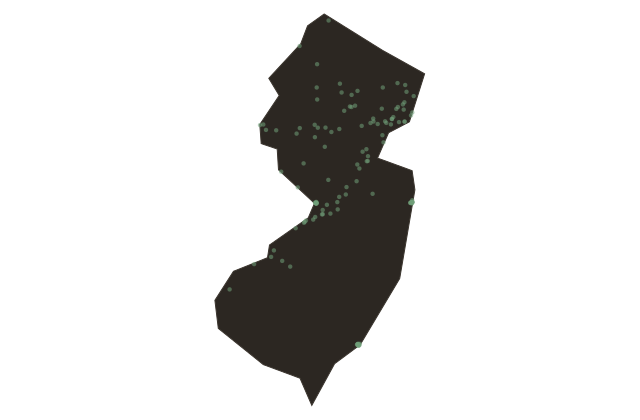
Near Trenton, New Jersey
Before the interstate highway, before the railroad, the most efficient way to move heavy goods across New Jersey was water. The Delaware and Raritan Canal solved a specific logistical problem: how do you connect Philadelphia and New York without going all the way around Cape May into the open Atlantic? You dig a ditch across the middle of the state.
Construction began in eighteen thirty and finished in eighteen thirty-four, at a cost of roughly two million eight hundred thousand dollars, equivalent to tens of millions today. The main canal ran forty-four miles from Bordentown, just south of Trenton, to New Brunswick on the Raritan River. A feeder canal extended twenty-two miles north along the Delaware from Trenton to Bulls Island, ensuring a steady water supply.
The canal's primary cargo was Pennsylvania coal moving toward New York. At its peak in the eighteen sixties and eighteen seventies, it was one of the busiest canals in the country. The waterway also accelerated Trenton's industrial growth. Raw materials could arrive and finished goods could depart without relying solely on roads that were often impassable in bad weather.
The railroad eventually killed the canal's commercial role, and it closed in nineteen thirty-two. Trenton handled its portion of the canal the way American cities often handle old infrastructure: Route One was built directly on top of it in nineteen fifty-two, and the water continues flowing underground to this day. The canal survives as a state park through most of its length, forty-four miles of towpath where the coal barges once moved in slow procession.