The First Boardwalk in the World
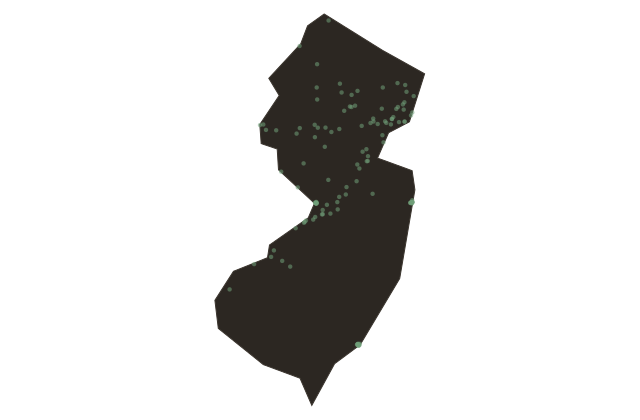
Near Atlantic City, New Jersey
The problem, from the beginning, was sand. Every visitor who walked off the beach tracked it into the hotels, into the railway cars, into the dining rooms. Hotel owners complained.
Train conductors complained. Something had to be done. The solution came in eighteen seventy from two men: Alexander Boardman, a conductor on the Camden and Atlantic, and Jacob Keim, a beachfront hotel owner.
Their idea was simple, lay a portable wooden walkway between the beach and the buildings. It cost five thousand dollars to build, roughly half of Atlantic City's entire tax revenue for that year. The boards were only eight feet wide and one mile long, designed to be folded up and stored each winter so the storms could not take them.
On June twenty-sixth, eighteen seventy, the first section was dedicated and opened to the public. It was the first boardwalk in the United States, and almost certainly the first in the world. The city kept building.
A second boardwalk replaced the first in eighteen eighty. A third, wider and elevated above the tide, went up after an eighteen eighty-four storm. Each version grew longer, broader, more permanent.
By the early twentieth century the Boardwalk had become a destination in its own right, stretching miles along the shore, lined with hotels, shops, rolling chairs pushed by attendants, and the full carnival of seaside commerce. What began as a practical measure against inconvenient sand became the template for a form of public space that spread to resort towns across America and beyond. The word itself, lowercase, became a noun in the language, so common that people stopped remembering it started here, on this particular shore, in a summer of eighteen seventy.