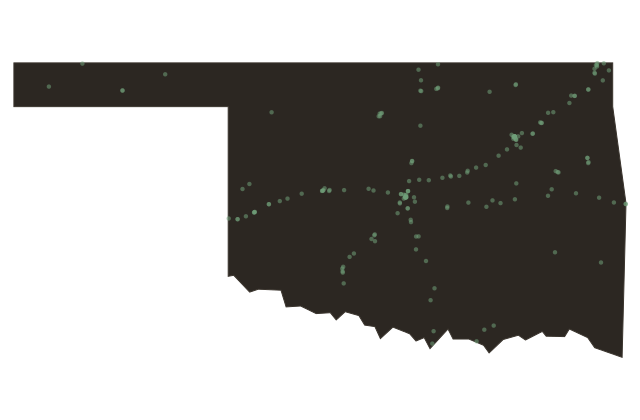
Black Sunday, April 14, 1935
Oklahoma
The Dust Bowl had been building since nineteen thirty. Five years of drought, five years of topsoil blowing off fields that had been deep-plowed by homesteaders who had broken the native sod that had held this ground against wind for ten thousand years. By the spring of nineteen thirty-five, farms across western Kansas and the Oklahoma Panhandle had already failed. Families were already leaving. The disaster was already documented in federal reports.
Then came April fourteenth.
At four in the afternoon, a wall of darkness three hundred miles wide and over a thousand feet high moved in from the north across Kansas toward Oklahoma. Temperatures dropped fifty degrees in minutes. The sky went from afternoon sun to absolute black. People who were outside walked into fence posts they could not see. Families in their homes pushed wet rags into window frames and breathed through damp cloth.
Robert Geiger, an Associated Press reporter stationed in Guymon, Oklahoma, watched it come. The next morning, April fifteenth, nineteen thirty-five, he filed his dispatch. In it, he used a phrase that had not appeared in print before: "Dust Bowl." The term attached itself to the decade.
The meteorological record, preserved in NOAA archives, documents April fourteenth as the worst single day in a decade-long disaster. What those archives cannot measure is what the Kansas Historical Society's oral testimony collection does: what it meant to be inside a farmhouse, children held against parents in the dark, not knowing if the structure would hold or whether morning would come.
The tallgrass prairie that originally covered this region, from horizon to horizon across one hundred seventy million acres, had held this soil for millennia. About four percent of it remains. Most of what replaced it blew away in storms like the one that passed over Guymon that April afternoon.