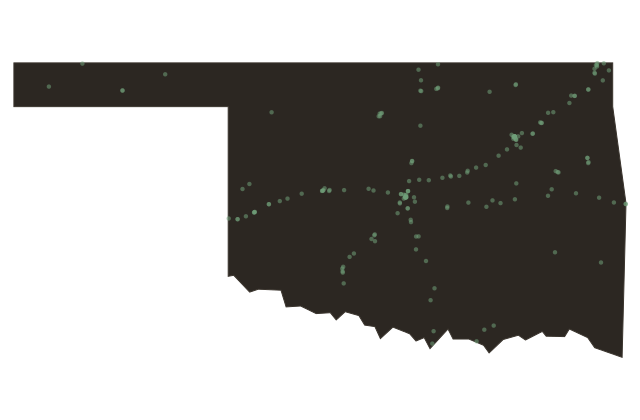
Catoosa, Oklahoma: The Farthest Inland Port
Near Tulsa, Oklahoma
The Cherokee Nation controlled this area for most of the nineteenth century, and in eighteen eighty-one the Atlantic and Pacific Railroad laid tracks through, naming the stop after a nearby hill. Catoosa became a cattle-shipping town, with William Halsell's Bird Creek Ranch sending herds east by rail. Route Sixty-Six brought tourist dollars in the nineteen forties, and the Catoosa Indian Trading Post served Mother Road travelers for decades.
Then in June of nineteen seventy-one, President Richard Nixon came to Catoosa to dedicate the Tulsa Port of Catoosa, the northern terminus of the McClellan-Kerr Arkansas River Navigation System, a four-hundred-forty-five-mile inland waterway connecting the Verdigris and Arkansas Rivers to the Mississippi and ultimately the Gulf of Mexico. The port made Catoosa, about fifteen miles from downtown Tulsa, one of the farthest inland river ports in the United States. The Blue Whale sculpture built by zoologist Hugh Davis as an anniversary gift to his wife in nineteen seventy-two has since become the town's most photographed landmark.