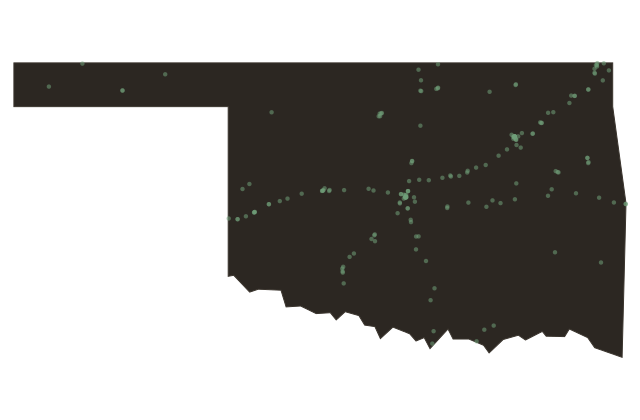
Fort Sill: The Last Frontier Post
Oklahoma
The post you see ahead, Fort Sill, has been active for more than one hundred fifty years, making it one of the longest-continuously-operating military installations in the United States. Its founding moment says everything about why it exists.
In January of eighteen sixty-nine, Major General Philip Sheridan led his army into Indian Territory in winter. Deliberately. He believed that striking in cold months, when the Southern Plains tribes were in their winter camps and horses were weak from poor grazing, would end resistance faster than summer campaigns. He was right, and brutal about it. He planted his new fort on the banks of Cache Creek in what is now southwestern Oklahoma and named it for his West Point classmate Joshua Sill, killed at the battle of Stones River in eighteen sixty-two. The Tenth Cavalry, one of the Buffalo Soldier regiments, helped build the permanent structures.
Fort Sill's purpose was to confine the Comanche, Kiowa, and Cheyenne to the surrounding reservation and stop the raids that had terrorized Texas settlements for decades. The plan worked through violence and starvation. By the eighteen eighties the Southern Plains wars were over.
Then in eighteen ninety-four, the Army brought Geronimo here. The great Chiricahua Apache leader had surrendered in Arizona in eighteen eighty-six after decades of resistance, and after years imprisoned in Florida and Alabama, he was among three hundred forty-one Apache prisoners of war transferred to Fort Sill. Geronimo spent his final years here farming, selling photographs of himself to tourists, and appearing at world's fairs and expositions. He was still legally a prisoner of war when he died of pneumonia on February seventeenth, nineteen oh nine, at approximately eighty years old. He is buried in the Beef Creek Apache Cemetery on the post, beneath a stone eagle, in Oklahoma soil he never chose.