Mother Road
Oklahoma
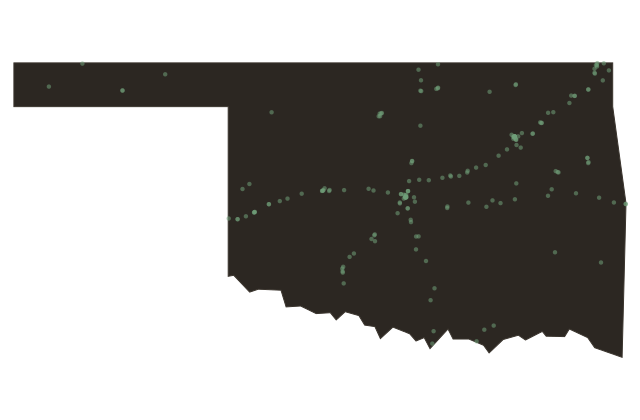
A Tulsa businessman named Cyrus Avery had a problem. In the early nineteen twenties, the federal government was finally building a national highway system, and Avery, who had become one of Oklahoma's state highway commissioners, intended to make sure the main east-west route ran directly through his state. His competitors wanted the road to follow a more northerly path, through Denver or Kansas City. Avery argued that a road running south through Tulsa and Oklahoma City, then west across the Texas Panhandle and through New Mexico and Arizona to California, would serve more people over more miles of actual terrain.
He won the argument. On November eleventh, nineteen twenty-six, U.S. Route Sixty-Six was officially designated, running from Chicago to Los Angeles, and its longest continuous drivable stretch, more than four hundred miles, ran through Oklahoma.
The road arrived at exactly the moment Oklahoma needed it most. The Dust Bowl years of the nineteen thirties turned it into the highway of exodus, the route that more than two hundred thousand Oklahomans and other Great Plains residents drove west in search of California agricultural work. John Steinbeck called it the mother road in The Grapes of Wrath, published in nineteen thirty-nine, and the name lasted longer than the road's official designation.
Route Sixty-Six was decertified in nineteen eighty-five when the Interstate Highway System made it redundant. But in Oklahoma, the old road never fully disappeared. It still runs through Arcadia and Stroud and Elk City and Shamrock just over the Texas line, through small towns that built themselves around the tourist traffic of the postwar decades, towns that are still making that argument to passing travelers today.
Oklahoma claims the longest drivable stretch of historic Route Sixty-Six remaining in the country. The mother road still has a pulse here, even if it is faint.