Chemawa Indian School: Oldest Boarding School Still Running
Near Salem, Oregon
Just north of Salem, on a campus that has operated continuously for more than a century and forty years, sits Chemawa Indian School. It is the oldest federally operated Native American boarding school still open in the United States. That longevity carries weight, and much of it is grief.
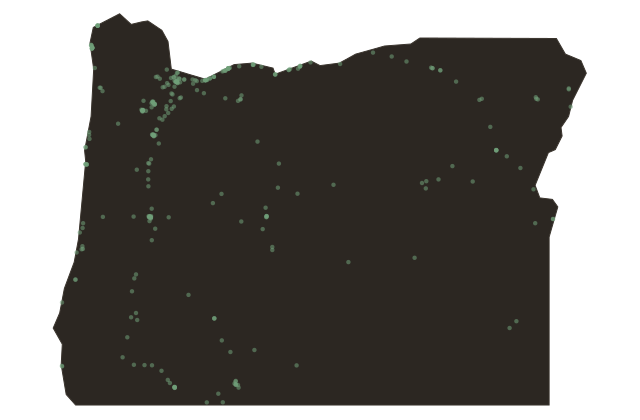
Chemawa's origins trace to February twenty-fifth, eighteen eighty, when the Forest Grove Indian Industrial Training School opened on land leased from Pacific University in the western foothills of Oregon. The federal government had authorized two off-reservation boarding schools that year; the other was the Carlisle Indian School in Pennsylvania. Forest Grove opened with fourteen boys and four girls from the Puyallup Tribe. Within five years, local hostility and a dormitory fire prompted a move to the outskirts of Salem, where the school was renamed Chemawa.
The institution's explicit purpose was what federal officials called civilization. In practice, that meant severing children from their families and cultures. Students were taken, sometimes by force, from tribes across the Pacific Northwest and Alaska. They were forbidden to speak their languages. They were dressed in uniforms, assigned Christian names, and drilled in English. Separation from home could last three to ten years or more.
Children died. Between eighteen eighty and nineteen forty-five, at least one hundred seventy-five children are buried in the school's cemetery, though researchers believe the true death toll was higher and have documented mismatches between grave markers and the actual locations of burials. In twenty twenty-one, a federally supported investigation found at least two hundred twenty-two sets of remains at the site, more than the federal government had previously acknowledged.
Chemawa continues to operate today as a Bureau of Indian Education high school, serving Native students from federally recognized tribes across the country. For many families, it is now a choice rather than a mandate. The school's history makes that distinction one of the most important sentences you can say about it.