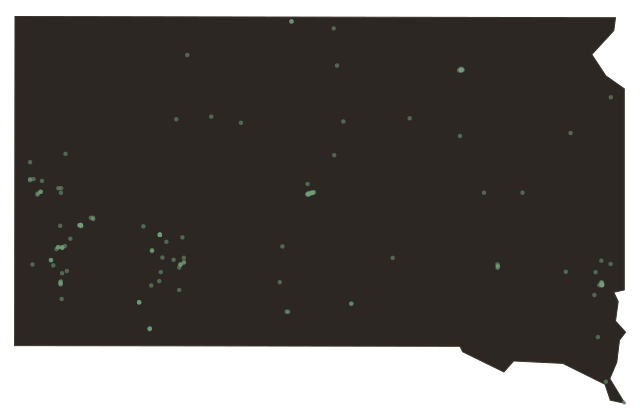
Buffalo Gap National Grassland
Near Interior, South Dakota
Surrounding the Badlands and stretching south toward the Nebraska border lies one of the least-known protected landscapes in the United States. The Buffalo Gap National Grassland covers more than five hundred ninety thousand acres of shortgrass and mixed-grass prairie, making it one of the largest national grasslands in the country. Most visitors drive straight past it on their way to the park formations without realizing they are already inside a federally managed landscape.
The land was assembled in the nineteen thirties by the federal government, which purchased millions of acres of failed homestead farms across the Great Plains at pennies on the dollar, retired them from cultivation, and began the long work of restoring native grass. The shortgrass and buffalo grass that once covered these plains evolved over millions of years alongside the bison herds that grazed them. They can survive on very little annual rainfall, go dormant through drought, and recover after fire or overgrazing in ways that wheat and corn cannot.
Today the Buffalo Gap National Grassland is managed by the United States Forest Service, and much of it is open to grazing by ranchers who hold permits. Pronghorn antelope, the fastest land animal in the Americas, move through the grassland in small groups year-round. Prairie dog towns dot the terrain at intervals, and in their burrows live the burrowing owls and black-footed ferrets that depend on the prairie dog ecosystem to survive.
The grassland is vast, mostly unvisited, and genuinely wild in a way that managed parks often are not.